
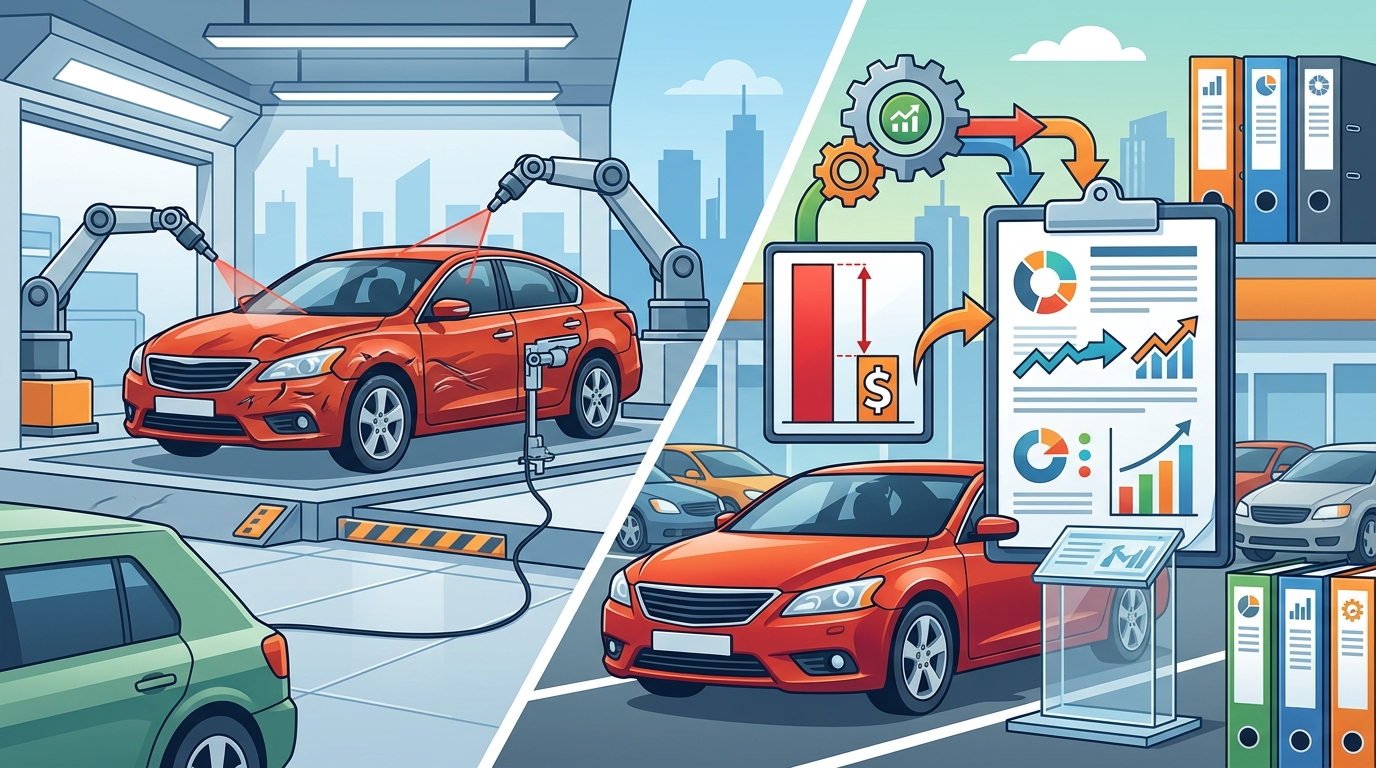
Even after perfect repairs, your vehicle's market value dropped. That loss belongs to you, not the at-fault driver. According to industry data, insurers consistently undervalue property damage claims, leaving millions in compensation on the table annually for accident victims across the United States. This guide explains how to quantify that loss and recover it using verified comparable sales and professional valuation reports.
What Is Diminished Value?
Diminished Value is the reduction in a vehicle's fair market value after it has been damaged in an accident and subsequently repaired. While repairs restore the vehicle's functionality, they rarely restore its market perception. Buyers are willing to pay less for a car with a known accident history, even if the repairs were performed to factory standards.
This concept is critical in insurance claims. Most standard auto policies cover the cost of repairs but often ignore the loss of value. This creates a gap in indemnification. A professional diminished value report bridges this gap by providing the evidence needed to reopen underpaid claims or negotiate a fair settlement.
Vehicle Value Analysis provides Inherent Diminished Value Reports that use real-world data to quantify this loss. These reports are backed by over a decade of Texas market data and are recognized by major insurance carriers.
Types of Diminished Value Claims
Understanding the specific type of diminished value applicable to your situation is the first step in recovery. There are three primary categories recognized in the industry.
Inherent Diminished Value
Inherent Diminished Value is the loss in value that remains after the vehicle has been fully repaired. This is the most common type of claim for vehicles under 20 years old with less than 100,000 miles. It applies regardless of who caused the accident in many jurisdictions.
Repair-Related Diminished Value
This type applies when the repairs were not performed correctly or to the original manufacturer's specifications. If the vehicle suffers from ongoing mechanical issues or poor paint matching, the value loss is compounded. This type of claim is often easier to substantiate because the physical evidence of poor workmanship is visible.
Stigma Diminished Value
Stigma diminished value refers to the loss in value due to the vehicle's history being recorded in public databases like CarFax or AutoCheck. Even if the repairs were perfect, the "accident history" tag stigmatizes the vehicle in the eyes of the market. This is particularly relevant for luxury and high-performance vehicles.
How Valuation Reports Work
Insurance companies often use proprietary algorithms to calculate vehicle values. These algorithms rarely account for the nuanced reality of the used car market. To counter this, you need a report based on real comparable sales, not estimates.
The Valuation Methodology
A professional valuation report follows a strict, defensible process:
- Pre-Loss ACV Determination: Establishing the true value of the vehicle before the accident occurred.
- Comparable Sales Analysis: Identifying similar vehicles in the same market that have been in accidents and sold for less than their clean counterparts.
- Deviation Percentage Formula: Applying a standardized formula to calculate the percentage of value lost due to the accident history.
- Demand Letter Generation: Creating a pre-addressed letter to the at-fault carrier outlining the claim.
This process ensures that the claim is not based on opinion but on verified market comparables. The result is a documented demand that insurers are forced to take seriously.
Report Delivery and Guarantees
Speed is essential in insurance claims. Vehicle Value Analysis delivers full reports, including pre-loss ACV, comps, and demand letters, in minutes. The Gold Report and Platinum Report options offer varying depths of analysis for complex cases.
All reports are backed by a $600 Money-Back Guarantee. If the report does not help you recover your diminished value, you receive a full refund. This removes the financial risk of pursuing a claim.
Support for Legal Professionals
For personal injury law firms, property damage claims are often the overlooked side of litigation. Most firms focus on bodily injury while leaving clients to handle the vehicle portion alone. This results in missed compensation and client frustration.
Bulk Solutions for PI Firms
Vehicle Value Analysis offers Bulk Solutions for Law Firms designed for high-volume practices. These solutions provide:
- Fast, accurate market valuations.
- Actual Cash Value (ACV) reports.
- Loss of Use calculations.
- Full Reparability Analysis.
The WHO OWES WHAT Portal centralizes all property damage work, allowing legal teams to manage dozens or even hundreds of files with ease. This streamlines communication and improves consistency across all cases.
Reopening Old Claims
One of the most powerful features of professional valuation is the ability to reopen underpaid claims. Insurers often close property damage files quickly, assuming the repair check is the final settlement. However, you have the right to reopen these claims if you can prove additional damages. Reports can support claims up to two years old, providing a second chance at full indemnification.
State-by-State Recovery Guide
Diminished value laws vary significantly by state. Some states have clear statutes protecting consumers, while others rely on case law or insurance regulations. Vehicle Value Analysis provides diminished value guides for all 50 states.
Whether you are in Texas, California, New York, or Florida, understanding your local regulations is crucial. The guides outline specific requirements for filing claims, the role of the appraisal clause, and the burden of proof required.
The Appraisal Clause
Most auto insurance policies contain an appraisal clause. This clause allows both parties to hire their own appraisers if they disagree on the value of the loss. If the appraisers cannot agree, an umpire is appointed. A professional diminished value report serves as the foundation for your appraiser's position in this process.
Key Takeaways
- Post-Repair Loss is Real: Your vehicle loses value even after perfect repairs due to market stigma and history.
- Insurers Undervalue Claims: Standard insurance algorithms often ignore diminished value, leaving compensation on the table.
- Verified Data is Critical: Claims based on real comparable sales are far more successful than those based on estimates.
- Legal Support is Available: Law firms can utilize bulk valuation solutions to streamline property damage claims.
- Time Limits Apply: You may be able to reopen underpaid claims up to two years old with proper documentation.
- State Laws Vary: Check your specific state's diminished value guide for local regulations.
- Risk-Free Evaluation: Reports come with a $600 Money-Back Guarantee, ensuring no financial risk in pursuing your claim.
Frequently Asked Questions
What is the difference between inherent and repair-related diminished value?
Inherent diminished value is the loss in value that remains after the vehicle has been fully repaired, regardless of repair quality. Repair-related diminished value occurs when the repairs were not performed correctly, leading to further loss in value.
How much does a diminished value report cost?
The cost varies depending on the depth of analysis required. The Inherent Diminished Value Report starts at $199.95. More comprehensive reports like the Gold and Platinum options are available for complex cases.
Can I claim diminished value if I was at fault?
In most states, diminished value claims are made against the at-fault party's insurance. If you were at fault, your own insurance may not cover diminished value unless you have specific coverage. However, you can still use a valuation report to understand your vehicle's true market value.
How long does it take to receive a report?
Reports are typically delivered in minutes. The Inherent Diminished Value Report is generated instantly upon completion of the assessment. Bulk solutions for law firms offer immediate to forty eight hour report delivery times.
What is the WHO OWES WHAT Portal?
The WHO OWES WHAT Portal is a centralized platform for legal professionals to manage property damage work. It allows firms to access reports, track cases, and streamline communication with insurers.
Are diminished value reports recognized by insurance companies?
Yes, reports based on verified comparable sales are recognized by major insurance carriers. They provide the necessary evidence to support claims and reopen underpaid files.
Can I get a refund if the report doesn't help?
Yes, Vehicle Value Analysis offers a $600 Money-Back Guarantee. If the report does not help you recover your diminished value, you receive a full refund.
Get Your Valuation Report
Do not let insurance companies undervalue your claim. Recover the post-repair diminished value you deserve. Start your Inherent Diminished Value Report today and see your car's real market value in 30 seconds. No card required. See your car's real market value now.