
Vehicle depreciation is a complex financial reality that affects every owner, yet most people underestimate the financial impact of an accident on their asset's worth. According to industry data, a single reported accident can reduce a vehicle's resale value by approximately 10% to 20%, regardless of how well the repairs are executed. This loss, known as diminished value, is often ignored by insurance carriers who prefer to settle for repair costs alone. Understanding the specific laws in your state is critical to recovering this lost equity. Many vehicle owners leave thousands of dollars on the table because they do not realize that post-repair market value is distinct from repair cost. This guide details the most frequent errors in vehicle valuation and how to correct them. (Real Comparable Sales Not)
Relying on Online Estimators Instead of Real Sales
The most common error in vehicle valuation is trusting algorithmic estimates over verified market data. Online valuation tools often use broad national averages that fail to account for local market fluctuations. These algorithms typically rely on listing prices rather than actual closing prices. Listing prices represent what sellers want, not what buyers are willing to pay. This discrepancy creates a false sense of security regarding your vehicle's true worth.
Real Comparable Sales provide a much more accurate picture of market value. When you analyze actual closed transactions, you see the true price points that buyers are currently accepting in your specific geographic area. This method eliminates the noise of inflated asking prices. It also accounts for local demand shifts that national algorithms miss. For instance, a truck might hold its value better in Texas than in Florida due to regional usage patterns. Using verified comparable sales ensures your valuation is grounded in reality, not speculation.
Vehicle Value Analysis specializes in providing these real comparable sales reports. Their platform aggregates data from actual transactions to give you a precise value range. This approach is far superior to generic online calculators. It provides the evidence needed to challenge low insurance offers. By focusing on closed sales, you establish a defensible baseline for your vehicle's worth.
Ignoring State-Specific Diminished Value Laws
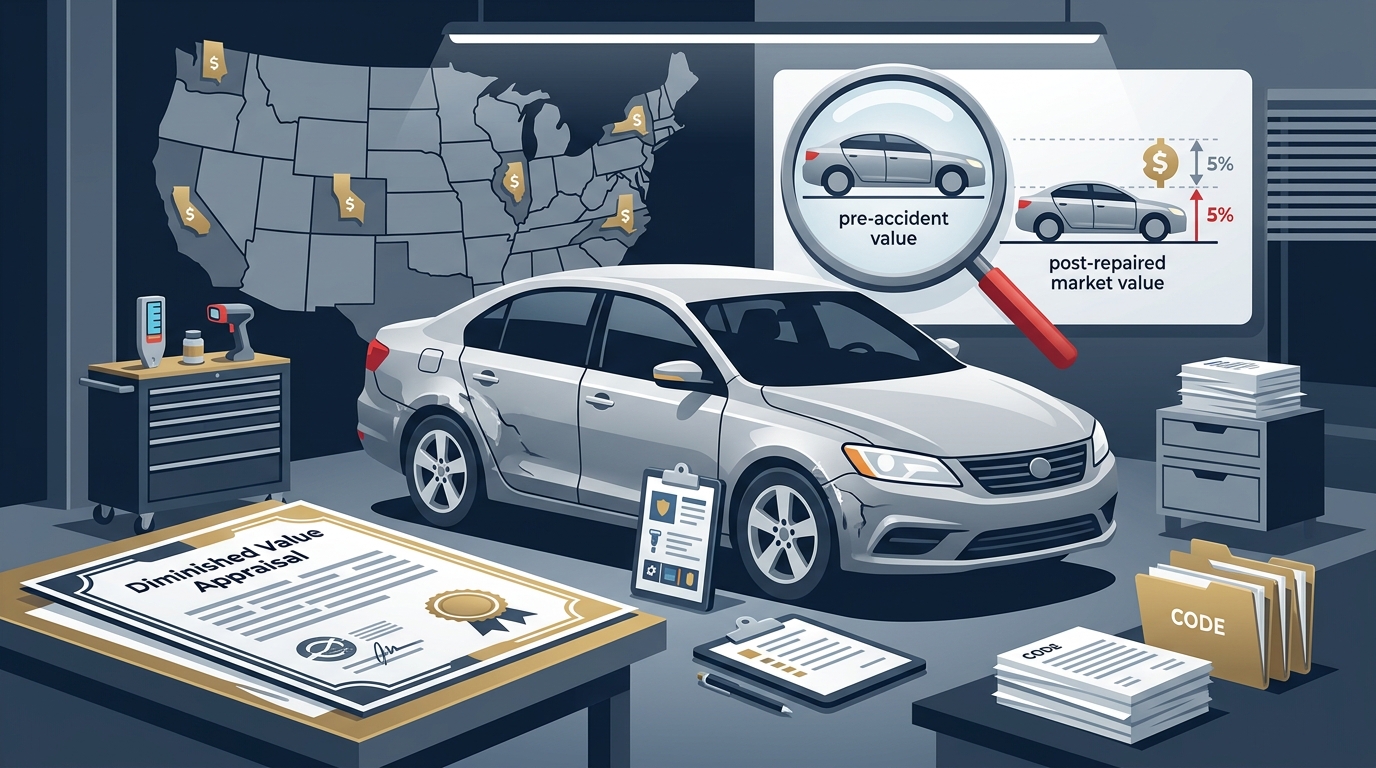
Diminished value is the reduction in a vehicle's market value after it has been repaired following an accident. Inherent Diminished Value occurs even when repairs are performed perfectly. The vehicle now has an accident history, which deters potential buyers. However, not all states recognize this concept equally. Some states have strict no-diminished-value laws, while others allow claims under specific conditions.
Understanding your state's legal stance is crucial for recovery. For example, Texas is known for being more favorable toward diminished value claims compared to some other jurisdictions. In contrast, states like New York or California may have stricter burdens of proof for policyholders. Ignoring these nuances can lead to rejected claims and wasted time. You must know whether your state allows for inherent diminished value recovery or only for repair-related diminished value.
Vehicle Value Analysis offers diminished value guides for all 50 states. These resources clarify the specific legal landscape in your region. They help you understand whether you have a viable claim. Knowing your rights empowers you to negotiate from a position of strength. It also helps you determine if hiring a professional appraiser is necessary. Without this knowledge, you may accept a settlement that does not reflect your legal entitlements.
Accepting the First Insurance Settlement Offer
Insurance adjusters are trained to minimize payouts. Their initial offer is rarely the maximum value you are entitled to. They often rely on internal valuation software that undervalues your vehicle. These systems may ignore unique features, low mileage, or excellent maintenance records. Accepting the first offer closes your claim permanently. You lose the ability to seek additional compensation later.
It is essential to review the settlement breakdown carefully. Look for line items that may have been omitted. Did they account for diminished value? Did they include loss of use? Did they consider aftermarket modifications? If any of these are missing, the offer is likely incomplete. You have the right to dispute the valuation if it does not align with market data. Providing evidence of higher comparable sales can force a re-evaluation.
Vehicle Value Analysis provides certified valuation documents that serve as powerful evidence. These reports include market-verified comparable grids that challenge the insurer's lowball numbers. Using professional data shifts the power dynamic in your favor. It demonstrates that your claim is backed by objective market forces, not just personal opinion. This approach often leads to higher, fairer settlements.
Overlooking Loss of Use and Rental Reimbursement
Many vehicle owners focus solely on the car's value and forget about the inconvenience of being without it. Loss of Use refers to the cost of renting a replacement vehicle while yours is being repaired. This is a legitimate part of the property damage claim. However, insurance policies often have limits on rental coverage. You must understand your policy's daily and total limits.
If your policy does not cover loss of use, you may still be able to claim it from the at-fault party. This requires documentation of your rental expenses and the duration of the repair period. Keeping detailed receipts is vital. Without proof, you cannot recover these costs. Additionally, some states allow for compensation for the loss of use even if you do not rent a car. This is based on the inconvenience and additional transportation costs you incur.
Vehicle Value Analysis offers Loss of Use Reports to help quantify this damage. These reports provide a standardized calculation of the financial impact of being without your vehicle. They ensure that you do not leave money on the table due to oversight. Including this in your claim strengthens your overall demand. It shows the insurer that you are thorough and knowledgeable about your rights.
Failing to Document Pre-Accident Condition
The condition of your vehicle before the accident significantly impacts its value. A well-maintained car with service records is worth more than one with a neglected history. If you cannot prove your pre-accident condition, the insurer may assume average wear and tear. This can lower your valuation. Documentation is your best defense against undervaluation.
Take photos of your vehicle regularly, especially before selling or after major maintenance. Keep all service records, receipts, and receipts for upgrades. These documents provide a clear timeline of your vehicle's care. They also help establish the baseline value for diminished value calculations. Without this evidence, it is difficult to prove that your car was in superior condition. This can lead to a lower settlement based on a generic profile.
Vehicle Value Analysis uses verified comparable sales to determine value, but your specific condition matters. If your car had unique features or exceptional maintenance, highlight this in your claim. Provide the documentation to support your assertion. This helps the appraiser or adjuster see the full picture. It ensures that your valuation reflects the true quality of your asset.
Not Understanding Total Loss Thresholds
A total loss occurs when the cost of repairs exceeds a certain percentage of the vehicle's value. This threshold varies by state. In some states, it is 75%, while in others, it is 100%. Understanding your state's threshold is critical. If your car is declared a total loss, you are entitled to the actual cash value (ACV) minus your deductible. However, insurers often undervalue the ACV.
Disputing a total loss valuation requires strong evidence. You need to prove that the vehicle's pre-accident value was higher than the insurer's offer. This is where real comparable sales become invaluable. If you can show that similar vehicles sold for more, you have a case for a higher settlement. Additionally, you may be able to buy back your totaled vehicle. This allows you to keep the car and receive a reduced settlement.
Vehicle Value Analysis provides Actual Cash Value Reports that establish the true pre-loss value of your vehicle. These reports are recognized by major insurance carriers. They provide the data needed to reopen underpaid claims. If you believe your total loss settlement is too low, use these reports to challenge the decision. Do not accept the first valuation without independent verification.
Key Takeaways
- Online estimators often overvalue vehicles by using listing prices instead of actual sales data.
- Diminished value laws vary significantly by state, affecting your ability to recover post-repair losses.
- Insurance adjusters frequently undervalue vehicles to minimize payouts, making independent appraisals essential.
- Loss of use and rental reimbursement are often overlooked but are recoverable parts of a property damage claim.
- Documenting pre-accident condition with photos and service records strengthens your valuation case.
- Total loss thresholds differ by state, influencing whether you can negotiate a repair or must accept a buyout.
- Vehicle Value Analysis provides certified reports and real comparable sales to support fair settlements.
Frequently Asked Questions
What is diminished value?
Diminished value is the reduction in a vehicle's market value after it has been repaired following an accident, even if the repairs were performed perfectly.
How do I know if my state allows diminished value claims?
You can determine this by reviewing your state's insurance regulations or consulting a diminished value guide. Some states have specific statutes governing inherent diminished value recovery.
Can I dispute my insurance company's vehicle valuation?
Yes, you can dispute the valuation by providing evidence of higher comparable sales and independent appraisals. Vehicle Value Analysis offers reports that are recognized by major carriers for this purpose.
What is the difference between ACV and diminished value?
Actual Cash Value (ACV) is the pre-accident market value of the vehicle. Diminished value is the loss in that value after repairs. ACV is used for total loss settlements, while diminished value is claimed for repaired vehicles.
How long do I have to file a diminished value claim?
The timeframe varies by state and policy, but some jurisdictions allow claims up to two years after the accident. It is best to act quickly to preserve evidence.
Do I need a professional appraiser for diminished value?
While not always required, a professional appraisal provides credible evidence that can force an insurer to re-evaluate their offer. Vehicle Value Analysis offers affordable reports for this purpose.
What is loss of use?
Loss of use refers to the compensation for the inconvenience and cost of being without your vehicle while it is being repaired, often covered by rental reimbursement or direct claims.
Take Control of Your Vehicle Valuation
Valuing your car accurately is not just about numbers; it is about understanding the legal and market forces at play. By avoiding these common mistakes, you can ensure that you receive the full compensation you deserve. Do not let insurance carriers dictate the value of your asset. Use verified data and professional reports to advocate for yourself.
If you are facing a low insurance offer or need to understand your diminished value rights, Vehicle Value Analysis is here to help. Our platform provides fast, accurate market valuations and certified reports that are recognized by major insurance carriers. We support both individual policyholders and law firms with comprehensive property damage solutions.
Start your free Silver Report today to see your car's real market value. Or, if you are an attorney handling multiple cases, explore our bulk solutions for law firms to streamline your property damage workflow. Visit our diminished value page to learn more about recovering your post-repair loss.