
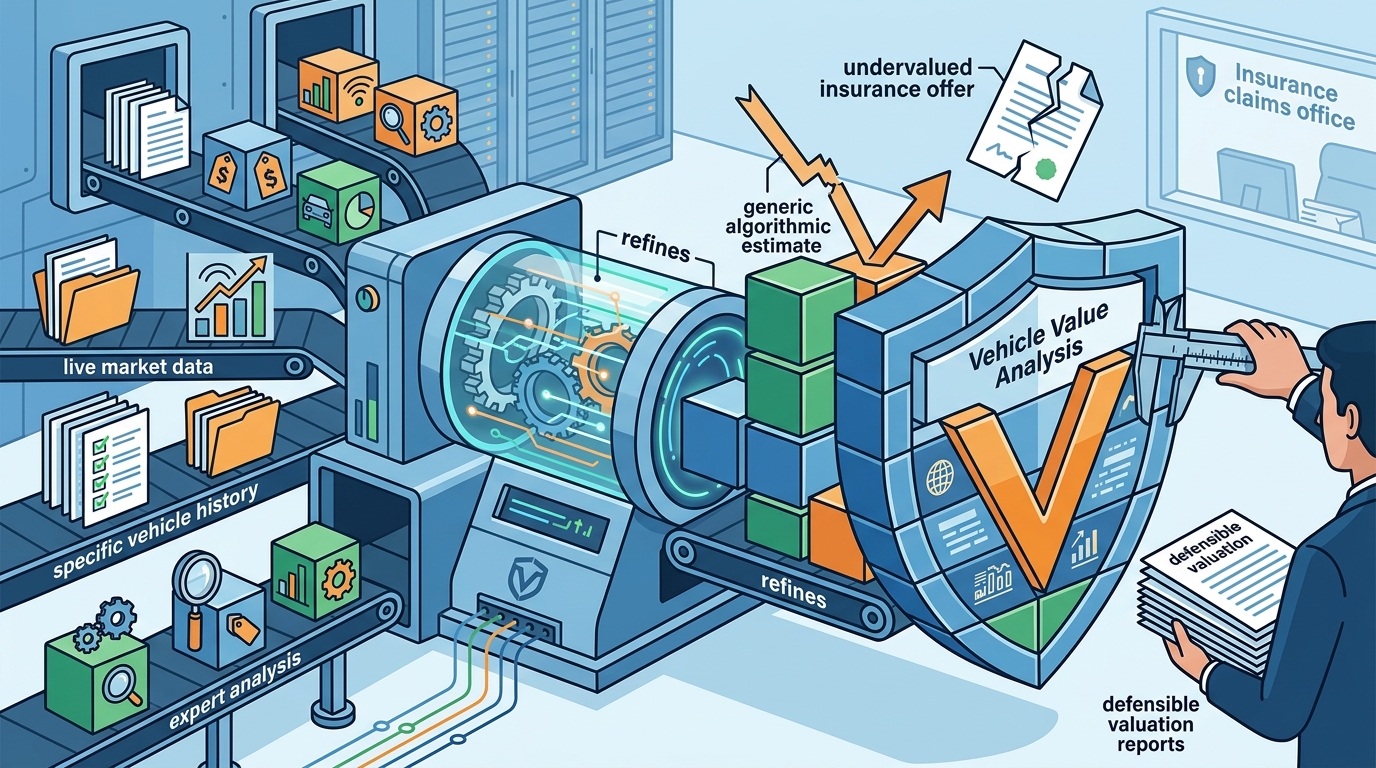
Establishing a defensible vehicle valuation is no longer about relying on generic algorithmic estimates or subjective appraisals. In the current landscape of property damage litigation and insurance disputes, accuracy is measured by the quality of the underlying data. According to recent industry analyses, insurers frequently undervalue vehicle claims by leveraging opaque internal formulas that do not reflect real-time market conditions. This discrepancy often results in significant financial losses for policyholders and undercompensated claims for legal professionals. To bridge this gap, stakeholders must shift from passive acceptance of carrier offers to active, evidence-based valuation strategies. This guide details the rigorous methodologies required to construct a valuation that withstands scrutiny from adjusters, opposing counsel, and appraisal panels. (Vehicle Valuation Services for)
The Primacy of Real Comparable Sales
The foundation of any defensible vehicle valuation rests on verified comparable sales. Unlike automated tools that rely on listing prices or estimated values, a true market valuation requires data from actual closed transactions. This distinction is critical because listing prices represent what sellers hope to achieve, whereas closed sales represent what the market actually paid. When building a valuation report, the inclusion of a verified comparable sales grid provides an undeniable snapshot of current market demand for specific makes, models, and conditions. (Finance Solutions Lender Protect)
Vehicle Value Analysis utilizes a proprietary methodology that aggregates these real-world data points to establish a precise pre-loss Actual Cash Value (ACV). By anchoring the valuation in hard data rather than software algorithms, the resulting figure becomes significantly harder for insurance carriers to dispute. This approach ensures that the valuation reflects the true economic reality of the vehicle at the time of the loss, providing a robust starting point for negotiations. (Disclaimer Vehicle Value Analysis)
Quantifying Inherent Diminished Value
Even after a vehicle is restored to its pre-accident condition, its market value often remains lower than it was before the damage occurred. This phenomenon is known as Inherent Diminished Value (IDV). IDV is the permanent reduction in a vehicle's resale or trade-in value resulting from its accident history, regardless of the quality of repairs. For high-value, luxury, or newer vehicles, this loss can be substantial, often ranging from 10 to 15 percent of the vehicle's value.
Recovering this loss requires a specialized report that goes beyond standard repair estimates. A professional diminished value analysis applies a defensible deviation-percentage formula to the pre-loss ACV, supported by market data that demonstrates how buyers discount vehicles with accident records. This process is not merely an estimation; it is a quantification of a real financial injury. By documenting this loss explicitly, claimants can demand compensation for the difference between the pre-accident value and the post-repair market value, ensuring full indemnification.
Navigating Legal Frameworks and State Laws
The ability to recover diminished value is not uniform across the United States. It is governed by a complex web of state-specific statutes, case law, and insurance regulations. Diminished Value coverage availability varies significantly by jurisdiction, with some states adhering to a "no-loss, no-pay" rule while others recognize inherent diminished value as a distinct component of property damage claims. Understanding these legal nuances is essential for any attorney or policyholder seeking to maximize recovery.
For instance, in states like Texas, Florida, and California, the legal standards for proving diminished value have evolved through numerous court decisions. These precedents often establish that an insurer has a duty to pay the full cost of restoration plus any resulting loss in value. Vehicle Value Analysis provides state-specific diminished value guides that outline the current legal landscape, helping users understand their rights and the specific documentation required to support a claim in their jurisdiction. This localized knowledge transforms a generic valuation into a legally potent instrument.
Operational Efficiency for High-Volume Firms
For personal injury law firms handling hundreds of active cases, the administrative burden of managing property damage claims can be overwhelming. Most firms focus heavily on bodily injury while leaving vehicle valuation to the client or a disjointed internal process. This fragmentation often leads to missed compensation opportunities and client dissatisfaction. A dedicated valuation partner streamlines this workflow by providing fast, accurate market valuations and appraisals designed for high-volume practice management.
The WHO OWES WHAT Portal centralizes all property damage work, allowing legal teams to manage dozens of files with ease. This platform simplifies communication, improves consistency, and saves significant time on every case. By integrating valuation services directly into their case management workflow, firms can ensure that every client receives complete representation. This holistic approach not only improves client outcomes but also strengthens the firm's reputation for thoroughness and attention to detail. For firms seeking to scale their property damage practice, bulk solutions offer a strategic advantage by reducing overhead while increasing the total value recovered per case.
Comparing Valuation Report Tiers
Selecting the appropriate level of valuation support depends on the complexity of the case and the specific needs of the stakeholder. Vehicle Value Analysis offers tiered reporting options to address these varying requirements. The following table outlines the key differences between the available report types.
| Report Type | Primary Use Case | Key Features | Delivery Time |
|---|---|---|---|
| Silver Report | Quick market value estimation for policyholders | Real-time value range, basic comparable data, no card required | Instant |
| Gold Report | Comprehensive ACV and diminished value analysis | Verified comparable sales, carrier demand letter, $600 guarantee | Minutes |
| Platinum Report | Expert witness-level documentation for litigation | Certified valuation, detailed deviation formula, full reparability analysis | 24-48 Hours |
Choosing the right tier ensures that the evidence presented is proportional to the stakes of the claim. For straightforward disputes, a Gold Report may suffice. However, for complex total loss negotiations or litigation where the valuation will be challenged by opposing experts, the Platinum Report provides the depth of analysis required to hold up under cross-examination.
Key Takeaways
- Real Data Over Algorithms: Defensible valuations rely on verified comparable sales data, not generic software estimates, to establish true market value.
- Inherent Diminished Value is Real: Vehicles lose value after accidents regardless of repair quality, and this loss is recoverable in many jurisdictions.
- State-Specific Laws Apply: Diminished value rights vary by state, requiring localized legal knowledge to navigate claims effectively.
- Speed Matters: Fast report delivery, often within minutes, allows legal teams to respond quickly to insurance offers and deadlines.
- Bulk Solutions Scale Practice: High-volume firms benefit from centralized portals that streamline property damage management and improve client outcomes.
- Guaranteed Accuracy: Professional reports often come with money-back guarantees, ensuring the client is protected if the valuation is deemed insufficient.
- Comprehensive Documentation: Including carrier demand letters and detailed grids strengthens the claimant's position in negotiations and appraisals.
Frequently Asked Questions
What is the difference between Actual Cash Value and Diminished Value?
Actual Cash Value (ACV) is the pre-loss market value of the vehicle, representing what it was worth before the accident. Diminished Value is the additional loss in value that remains after the vehicle has been repaired. ACV covers the cost of repairs or the total loss payout, while Diminished Value compensates for the permanent stigma of the accident history on the vehicle's resale price.
How long does it take to receive a diminished value report?
Delivery times vary by report tier. Silver Reports are generated instantly for quick estimates. Gold Reports are typically delivered within minutes to your inbox. Platinum Reports, which involve deeper expert analysis, are delivered within 24 to 48 hours to ensure maximum accuracy and certification.
Can I recover diminished value if my insurance company denies the claim?
Yes, in many states, you have the right to pursue diminished value even if your carrier initially denies it. This often involves invoking the appraisal clause in your insurance policy or filing a lawsuit. A professional report provides the necessary evidence to support your demand and challenge the carrier's lowball offer.
Is diminished value coverage available in all 50 states?
While diminished value claims are possible in all 50 states, the legal standards and recoverability vary significantly. Some states have strict "no-loss, no-pay" rules, while others recognize inherent diminished value. It is crucial to consult state-specific guides to understand the applicable laws in your jurisdiction.
What is the WHO OWES WHAT Portal?
The WHO OWES WHAT Portal is a centralized management platform designed for law firms. It allows legal teams to access, manage, and track all property damage valuations, reports, and communications for multiple cases in one secure location, streamlining the workflow for high-volume practices.
How does Vehicle Value Analysis ensure the accuracy of its valuations?
The company uses real comparable sales data rather than algorithmic estimates. By analyzing actual closed transactions for similar vehicles in the relevant market, they establish a defensible pre-loss value. This data-driven approach is backed by over a decade of Texas market data and is recognized by major insurance carriers.
What is the cost of a diminished value report?
The cost depends on the tier of service selected. The Inherent Diminished Value Report is priced at $199.95 and includes a full analysis, comparable sales grid, and a carrier demand letter. This fee is often refundable under their $600 money-back guarantee if the report does not meet expectations.
Secure Your Valuation Today
Do not leave money on the table due to inadequate valuation methods. Whether you are a policyholder seeking fair compensation or an attorney managing a high-volume practice, accurate data is your most powerful tool. Start by finding your car's real value with a free Silver Report, or explore our bulk solutions for law firms to streamline your property damage workflow. For comprehensive support, request a demo of our Gold Report services or dive into our diminished value resources to understand your rights. Visit our FAQ page for more details on how we can help you build a defensible case.