
Choosing the Right Vehicle Valuation Service Based on Comparable Sales Data
Most vehicle owners accept the first insurance settlement offer without realizing they are leaving thousands of dollars on the table. According to industry data, a significant percentage of property damage claims are underpaid because insurers rely on algorithmic estimates rather than real market transactions. This discrepancy creates a massive gap between what an algorithm says your car is worth and what a buyer will actually pay. Understanding this gap is the first step toward financial recovery after an accident.
Why Comparable Sales Data Trumps Algorithms
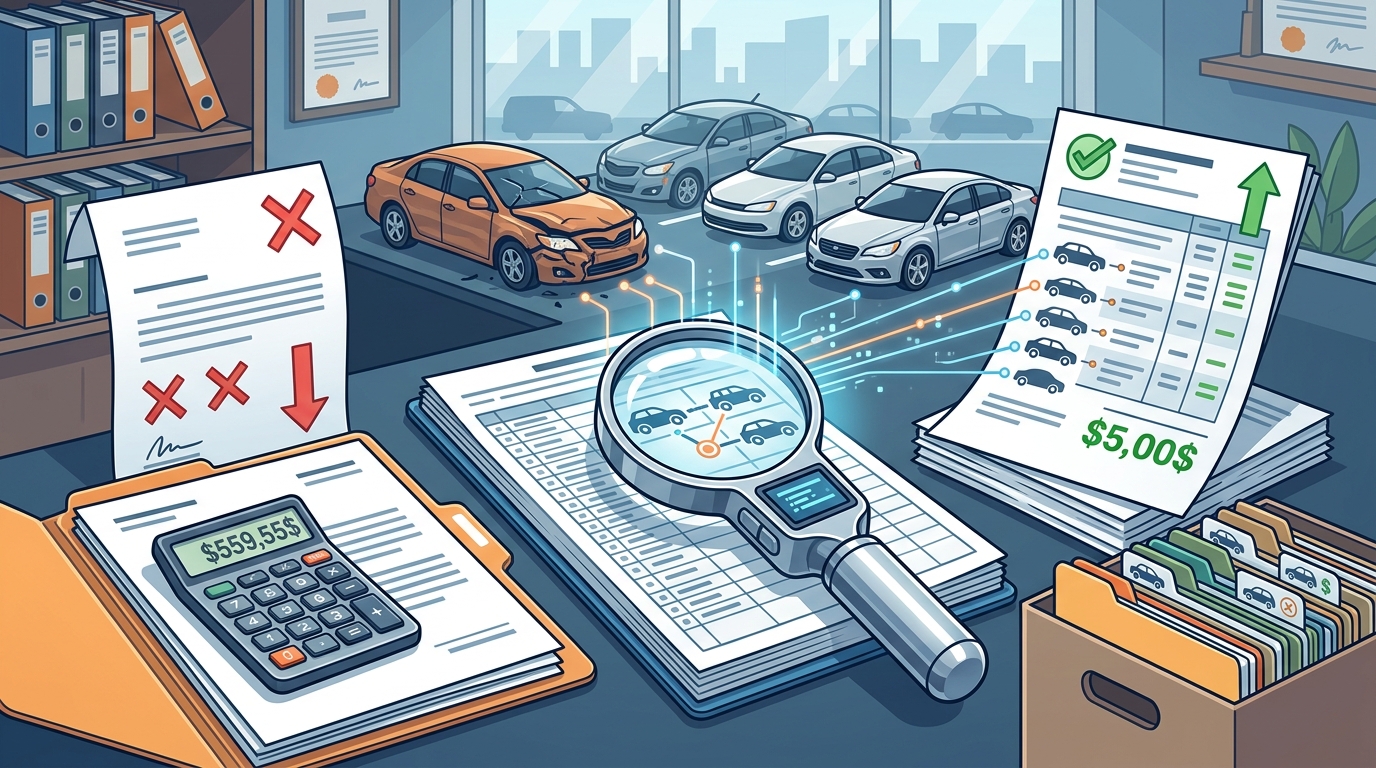
Traditional valuation tools often use broad market averages that fail to account for local nuances, vehicle condition specifics, or recent market volatility. In contrast, a valuation service built on verified comparable sales looks at actual transactions of similar vehicles in your specific geographic area. This method provides a defensible, evidence-based price point that algorithms simply cannot replicate.
When you are dealing with an insurance company, they use their own proprietary software to determine the Actual Cash Value (ACV). These systems are designed to minimize payouts. By presenting a report based on real comparable sales, you shift the power dynamic. You are no longer asking for a favor; you are presenting factual market data that demands a fair settlement.
This approach is particularly critical in total loss scenarios. If the insurer declares your car a total loss, they will offer you the ACV. Without independent verification, you have little leverage to dispute a lowball offer. A professional valuation report bridges this gap by providing the documentation needed to reopen negotiations or invoke the appraisal clause.
Understanding ACV vs. Diminished Value
To choose the right service, you must first understand what you are valuing. There are two primary types of vehicle valuation claims that arise after an accident: Actual Cash Value and Diminished Value. Each requires a different analytical approach and documentation style.
Actual Cash Value (ACV) is the fair market value of your vehicle immediately before the accident occurred. It represents what a willing buyer would pay a willing seller for your car in its pre-accident condition. This valuation is crucial when your vehicle is totaled and you need to determine the settlement amount for the loss of the asset itself.
Diminished Value is the reduction in your vehicle's market value after it has been repaired following an accident. Even if the repairs are perfect, the vehicle's history as an "accident car" lowers its resale price. This concept is vital for owners who have repaired their vehicles and intend to sell or trade them later. The loss is real, and it belongs to you, not the at-fault party.
Understanding the distinction is key. If you are filing a total loss claim, you need an ACV report. If you have repaired your car and are seeking compensation for the loss of value, you need a Diminished Value report. Some services offer both, while others specialize in one area. Knowing your end goal will help you select the appropriate tool.
Consumer Tools vs. Legal Support
The market offers two distinct categories of valuation services: self-serve consumer tools and professional services designed for legal and bulk workflows. Your choice depends on your technical comfort, the complexity of your claim, and whether you are working with an attorney.
Consumer tools are designed for speed and accessibility. They allow you to generate a preliminary report in minutes by inputting your vehicle details. These tools are excellent for getting a quick snapshot of your car's worth. However, they often lack the depth of analysis required for high-stakes negotiations. They may not include the detailed comparable sales grids or the legal demand letters needed to pressure an insurance carrier.
Professional services, particularly those tailored for law firms, offer a higher level of scrutiny. These services provide certified valuation documents that are recognized by major insurance carriers. They include comprehensive reviews for complex cases, including inherent diminished value and repairability disputes. For legal professionals, these services streamline operations by providing a centralized portal to manage dozens of files.
If you are an individual consumer, a professional report can still be worth the investment. The documentation provided is often more robust than what a consumer tool can generate. It includes a carrier demand letter pre-addressed to the at-fault carrier, which simplifies the next steps in your claim. For those facing under-indemnification, this level of detail can be the difference between a fair settlement and a significant financial loss.
Comparing Report Tiers and Deliverables
Most professional valuation services offer tiered reporting options to meet different needs and budgets. Understanding what each tier includes is essential for making an informed decision. Below is a comparison of the typical deliverables found in the industry.
| Report Tier | Primary Use Case | Key Deliverables | Ideal For |
|---|---|---|---|
| Silver Report | Quick Market Value Check | Basic value range, limited comps, instant results | Consumers seeking a quick estimate |
| Gold Report | Standard Diminished Value Claim | Full DV analysis, verified comps, demand letter | Individuals filing a DV claim |
| Platinum Report | Complex Legal & Total Loss | ACV, DV, Loss of Use, full reparability analysis | Attorneys and high-value claims |
The Silver Report is often a free or low-cost entry point that provides immediate results. It is useful for understanding the general market value but lacks the depth for formal disputes. The Gold Report is the standard for most diminished value claims. It includes the necessary documentation to support a direct negotiation with the insurance carrier. The Platinum Report is designed for complex scenarios, such as total loss negotiations or cases requiring multiple types of valuation data.
When selecting a tier, consider the complexity of your claim. Simple cases may only require a Gold Report. However, if you are dealing with a disputed valuation or a high-value vehicle, the Platinum Report's comprehensive analysis may be necessary. Always review the specific deliverables of each tier to ensure they meet your needs.
How to Select the Right Service
Choosing the right vehicle valuation service requires evaluating several critical factors. The market is saturated with options, but not all services are created equal. Here are the key criteria to consider when making your selection.
Data Source Integrity is the most important factor. Ensure the service uses verified comparable sales from your local market. Avoid services that rely solely on national averages or outdated data. The accuracy of your valuation depends entirely on the quality of the underlying data. Look for providers that explicitly state their use of real-time, location-specific transaction data.
Industry Recognition is another crucial consideration. Your report will likely be reviewed by insurance adjusters and potentially legal professionals. Choose a service whose reports are recognized by major insurance carriers. This recognition lends credibility to your claim and reduces the likelihood of your report being dismissed without review. Providers with a history of supporting law firms often have this advantage.
Delivery Speed and Support matter when you are dealing with time-sensitive claims. Some services offer immediate delivery, while others may take several days. For legal professionals handling high volumes, fast turnaround times are essential. Additionally, consider the level of customer support provided. Do they offer assistance with interpreting the report? Do they help with the negotiation process?
Guarantees and Refunds provide an extra layer of security. Many reputable services offer money-back guarantees if the report does not meet certain standards or if the data is found to be inaccurate. This indicates confidence in their product and reduces your financial risk. Always read the terms of the guarantee carefully to understand what is covered.
Key Takeaways
- Real comparable sales data is more accurate than algorithmic estimates for determining vehicle value.
- Actual Cash Value (ACV) represents pre-accident value, while Diminished Value covers post-repair loss.
- Professional reports offer certified documentation that is recognized by major insurance carriers.
- Tiered reporting options allow users to choose between quick estimates and comprehensive legal support.
- Data source integrity is the primary factor in selecting a reliable valuation service.
- Services tailored for law firms provide bulk solutions and centralized management portals.
- Money-back guarantees protect consumers if the report fails to meet industry standards.
Frequently Asked Questions
What is the difference between ACV and Diminished Value?
Actual Cash Value (ACV) is the value of your vehicle before the accident, used for total loss settlements. Diminished Value is the loss in market value after the vehicle has been repaired, which you can claim even if the repairs are perfect.
How long does it take to get a valuation report?
Consumer tools can provide instant results in minutes. Professional reports typically take between immediate to forty eight hours to generate, depending on the complexity of the analysis and the tier selected.
Are diminished value reports recognized by insurance companies?
Yes, reports from reputable providers that use verified comparable sales are recognized by major insurance carriers. They provide the necessary evidence to support a claim under the appraisal clause or during direct negotiation.
Can I use a valuation service for a total loss claim?
Absolutely. A valuation service can provide an Actual Cash Value report that establishes the true pre-loss value of your vehicle. This is essential for disputing lowball offers from insurers.
What is included in a Platinum Report?
A Platinum Report typically includes a comprehensive analysis of Actual Cash Value, Diminished Value, Loss of Use, and full reparability analysis. It is designed for complex cases and legal support.
How do I know if my vehicle has diminished value?
If your vehicle has been in an accident and repaired, it likely has diminished value. The history of the accident lowers its resale price compared to a similar vehicle with no accident history. A professional report can quantify this loss.
Is there a guarantee on these reports?
Many reputable services offer money-back guarantees, such as a $600 guarantee, if the report does not meet certain standards or if the data is inaccurate. Always check the specific terms of the guarantee.
Take Control of Your Vehicle Claim
Do not let insurance algorithms dictate the value of your property. Whether you are an individual consumer seeking fair compensation or a legal professional managing high-volume claims, the right valuation service can make all the difference. By leveraging verified comparable sales data, you can ensure that every client receives accurate and complete compensation.
Explore our comprehensive solutions designed to streamline your workflow and improve outcomes. Request a demo today to see how our platform can support your practice. For immediate insights, find your car's real value now and start the process of recovering what you are owed.