
Common Mistakes When Using Vehicle Valuation Services for Diminished Value Claims
Most vehicle owners accept the first insurance settlement offer without realizing they are leaving thousands of dollars on the table. According to industry data, insurers frequently undervalue property damage claims, leading to significant financial loss for policyholders who do not have expert documentation. This gap between the insurer's offer and the vehicle's true market value is known as diminished value, and recovering it requires precise, defensible evidence. Without a professional valuation report, you are essentially negotiating blind against a company that has specialized teams dedicated to minimizing payouts. Understanding the common pitfalls in this process is the first step toward securing the full compensation you deserve.
Relying on Online Estimators Instead of Real Sales Data
The most frequent error policyholders make is trusting automated online car value tools. These platforms often use algorithmic estimates based on broad market trends rather than specific, verified comparable sales. A professional diminished value report relies on actual transaction data for vehicles identical to yours in your specific geographic market. This distinction is critical because market values fluctuate rapidly based on local demand and supply.
When you use a service that provides real comparable sales, you are armed with concrete evidence that an appraiser cannot easily dismiss. Vehicle Value Analysis specializes in this exact methodology, ensuring that your claim is backed by hard data rather than speculative numbers. Using generic estimators can lead to a demand that is either too low, leaving money on the table, or too high, causing the insurer to reject the claim outright due to lack of credibility.
Ignoring the 10% Rule and Inherent Value Loss
Many drivers believe that if their car is repaired perfectly, its value remains unchanged. This is a fundamental misunderstanding of automotive economics. Even with flawless repairs, the vehicle's history as an accident car creates a permanent reduction in market value. This is referred to as inherent diminished value. Insurers often argue that because the car is "back to normal" mechanically, no financial loss occurred.
To counter this, you must understand the standard deviation-percentage formula used in professional appraisals. This formula calculates the loss based on the severity of the damage and the vehicle's age. For example, a recent study on vehicle depreciation suggests that even minor structural repairs can impact resale value by a measurable percentage. By ignoring this inherent loss, you are effectively waiving your right to recover the difference between the pre-accident value and the post-repair market value.
Failing to Document Pre-Loss Condition Accurately
Before you can prove a loss, you must establish the baseline. A common mistake is failing to document the vehicle's condition prior to the accident. If the car had existing wear and tear, minor scratches, or high mileage, the insurer will use this to argue that the diminished value is lower than it actually is. They may claim that the vehicle was already worth less due to its age or condition.
Accurate pre-loss documentation is essential for a fair appraisal. This includes mileage records, service history, and photographs of the vehicle before the incident. When you request a report, ensure that the valuation service accounts for these factors. A comprehensive report will adjust the pre-loss actual cash value to reflect the true state of the vehicle, ensuring that your diminished value calculation is based on a realistic baseline. Without this, your claim may be reduced by the insurer's adjusters who are trained to look for any reason to lower the payout.
Submitting Reports Without a Carrier Demand Letter
Simply having a valuation report is not enough. You must present it in a format that compels the insurance company to act. A common error is sending a raw PDF report without a formal demand letter. The demand letter serves as the legal and financial argument for your claim, summarizing the findings and explicitly stating the amount you are owed.
A professional diminished value report includes a pre-addressed carrier demand letter. This document ties the valuation data directly to the insurance policy and the specific claim number. It outlines the methodology used, cites relevant state laws regarding diminished value, and provides a clear path for resolution. Without this structured approach, your claim may get lost in the adjuster's queue or be dismissed as an informal inquiry rather than a formal demand for compensation.
Missing the Statute of Limitations for Claims
2025Time is a critical factor in diminished value claims. Many states have strict statutes of limitations that dictate how long you have to file a claim after an accident. If you wait too long to seek a valuation or submit your demand, you may lose the right to recover any compensation entirely. This is particularly risky in cases where repairs take weeks or months to complete.
It is crucial to act quickly. Some jurisdictions allow you to reopen underpaid claims up to two years old, but this is not universal. Delaying the process can also weaken your position, as memories fade and documentation becomes harder to locate. By obtaining a report promptly, you preserve your legal rights and ensure that you are within the allowable window for negotiation. Do not assume that the insurance company will remind you of these deadlines; it is your responsibility to manage the timeline.
Choosing the Wrong Valuation Report Tier
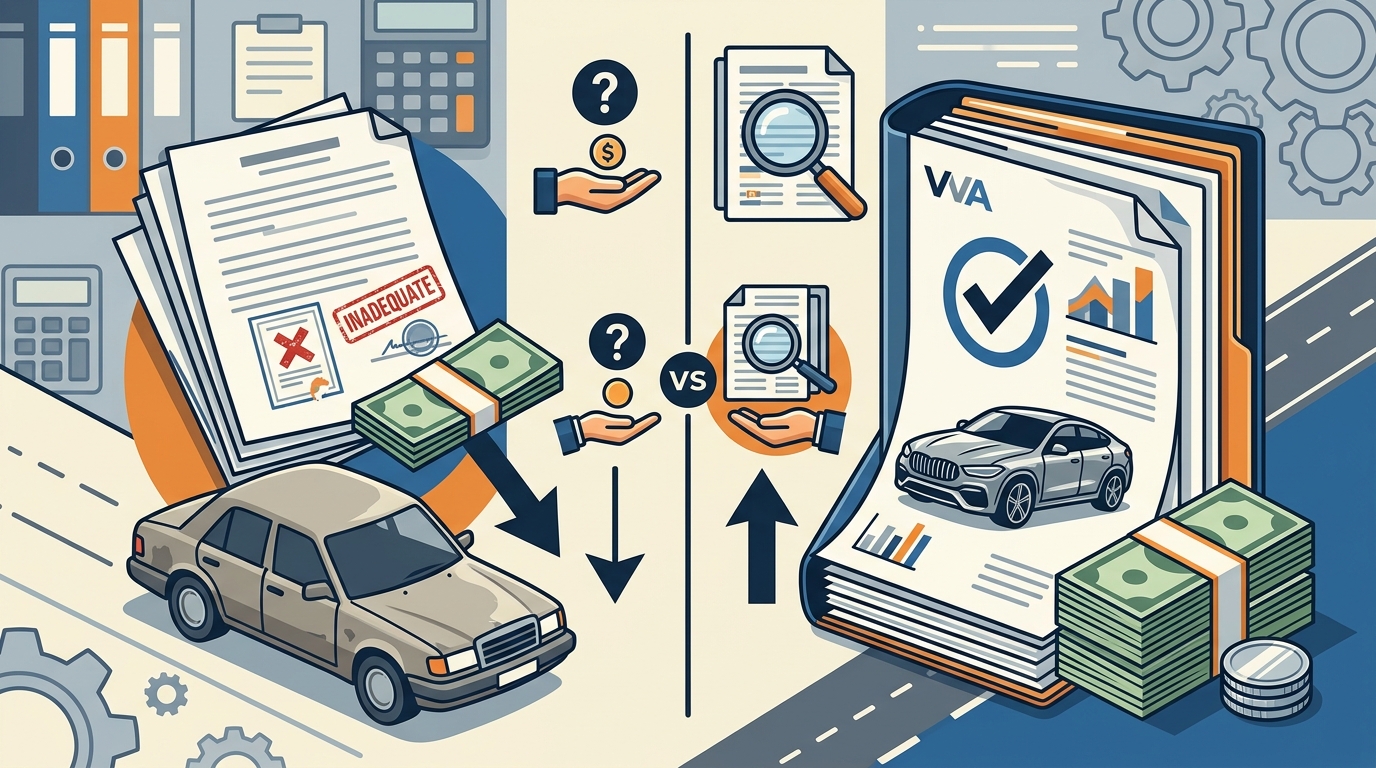
Not all valuation reports are created equal. Many consumers choose the cheapest option without understanding the depth of analysis required for a successful claim. A basic estimate may not hold up in a dispute or appraisal clause hearing. You need a report that includes verified comparable sales, a detailed deviation analysis, and expert certification.
| Report Type | Best For | Key Features | Strength in Negotiation |
|---|---|---|---|
| Silver Report | Quick, straightforward claims | Basic valuation, instant results | Moderate |
| Gold Report | Standard diminished value claims | Verified comps, demand letter | High |
| Platinum Report | Complex or disputed claims | Full appraisal, expert testimony support | Very High |
For most policyholders, the Gold Report offers the best balance of cost and effectiveness. It provides the necessary documentation to negotiate directly with the insurer. However, if your claim is complex or the insurer is resisting, the Platinum Report provides the additional legal weight needed to force a settlement. Choosing the wrong tier can result in a report that is either insufficient to win the case or unnecessarily expensive for a simple claim.
Key Takeaways
- Real Data is Critical: Always use a service that provides verified comparable sales, not just algorithmic estimates.
- Inherent Loss Exists: Even perfect repairs do not restore a vehicle's full market value due to its accident history.
- Pre-Loss Condition Matters: Accurate documentation of the vehicle's state before the accident is essential for a fair baseline.
- Formal Demand Required: Submit a professional demand letter alongside your report to ensure the claim is processed seriously.
- Watch the Clock: Be aware of your state's statute of limitations to avoid losing your right to compensation.
- Choose the Right Tier: Select a report depth that matches the complexity of your claim and the resistance of the insurer.
- Expert Support: Professional appraisals are recognized by major insurance carriers and can significantly increase your settlement.
Frequently Asked Questions
What is diminished value?
Diminished value is the reduction in a vehicle's market value after it has been involved in an accident, even if it has been repaired to pre-accident condition.
How long do I have to file a diminished value claim?
The timeframe varies by state, but many jurisdictions allow claims to be filed within two years of the accident. It is best to act as soon as repairs are complete.
Do I need a professional report to claim diminished value?
While not always legally required, a professional report is highly recommended. It provides the necessary evidence to counter the insurer's lowball offers and supports your demand in negotiations.
Can I claim diminished value if I have comprehensive coverage?
Diminished value claims are typically associated with collision or at-fault accidents. Comprehensive coverage usually applies to non-collision events, but policy terms vary, so check your specific contract.
What is the difference between inherent and repair-related diminished value?
Inherent diminished value is the loss in value simply because the car has an accident history. Repair-related diminished value occurs if the repairs were not done correctly or if inferior parts were used.
How is the diminished value amount calculated?
It is calculated using a deviation-percentage formula based on the severity of the damage, the vehicle's age, mileage, and verified comparable sales data for similar vehicles in your area.
What if the insurance company rejects my claim?
If your claim is rejected, you can invoke the appraisal clause in your insurance policy. A professional report strengthens your position in this process by providing a defensible valuation.
Secure Your Full Compensation Today
Do not let insurance adjusters dictate the value of your vehicle. By avoiding these common mistakes and utilizing a professional, data-driven valuation service, you can recover the full compensation you are owed. Our team provides fast, accurate reports recognized by major insurance carriers, ensuring you have the leverage needed to negotiate a fair settlement. Start your diminished value report now and see the true value of your vehicle in minutes.