
Comparable sales data determines your car's post-accident value by analyzing recent, verified transactions of similar vehicles in your specific geographic area. This method replaces generic estimates with real market evidence. Vehicle Value Analysis uses this approach to ensure you are not underpaid by insurance carriers or dealers.
Defining Comparable Sales in Vehicle Valuation
Comparable sales data is a valuation method that uses the prices of recently sold, similar vehicles to estimate the fair market value of a subject vehicle. In the context of an accident, this data serves as the objective benchmark against which an insurance adjuster's offer is measured. It is the most reliable indicator of what a buyer is actually willing to pay in the open market.
Unlike book values or automated estimates, comparable sales reflect real-world transactions. When a vehicle is damaged, its value drops. To quantify that drop accurately, you need data from vehicles that have already been sold in your local market. This ensures the valuation accounts for local supply and demand, rather than national averages that may not apply to your region.
The Role of Verified Transactions in Valuation
Adjusting for Mileage, Trim, and Condition
Raw comparable sales data is not enough on its own. A proper valuation must adjust for specific vehicle attributes. Mileage is the most significant factor, but it does not impact value in a linear way. Crossing thresholds like 60,000 or 100,000 miles can cause disproportionate value drops. An accurate report applies non-linear mileage adjustments to reflect how buyers perceive these milestones.
Trim level and equipment packages also play a major role. A base model and a top-tier model of the same car can differ in value by thousands of dollars. Insurance systems often misclassify these details, leading to incorrect Actual Cash Value (ACV) calculations. Vehicle Value Analysis verifies the exact trim, drivetrain, and factory packages to ensure the comparable sales used are truly equivalent to your vehicle.
Regional Market Dynamics and Local Demand
Car values are local, not national. Climate, local demand, and inventory shortages can dramatically change what a vehicle is worth in your specific ZIP code. For instance, all-wheel-drive vehicles often command a premium in cold-weather regions, while convertibles may lose value in northern markets during winter. National averages fail to capture these nuances.
When an accident occurs, the local market conditions at that time are what matter. If your area has a shortage of your specific vehicle model, the value will be higher than in a region with high inventory. Using regional comparable sales ensures your valuation reflects the actual market you are in. This is why a valuation based on national data is often insufficient for disputing a low insurance offer.
Using Data to Dispute Low Insurance Offers
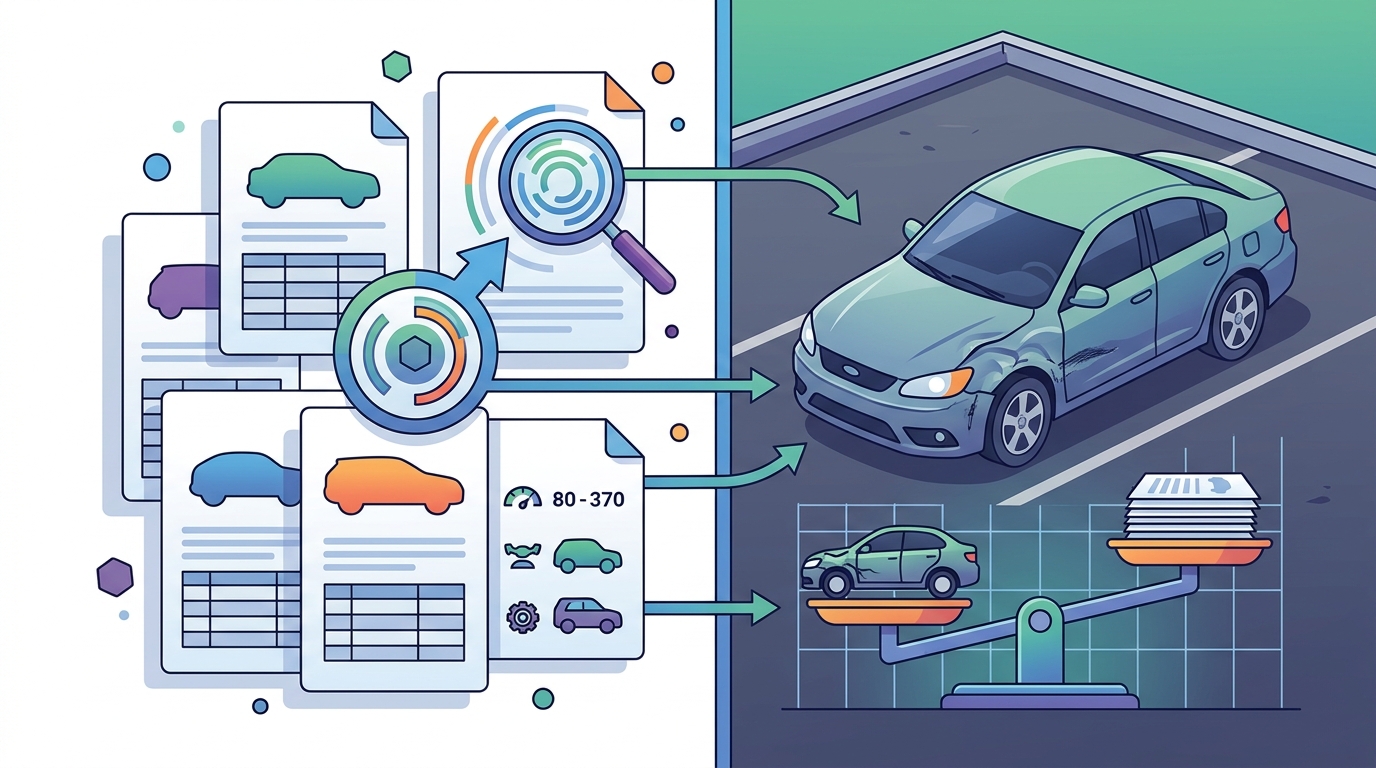
When an insurance company offers a settlement that seems low, the first step is to understand how they calculated it. Most carriers use automated tools that may not account for your vehicle's specific condition or local market trends. By presenting a report built on verified comparable sales, you shift the conversation from opinion to evidence.
Vehicle Value Analysis provides certified valuation documents that include a grid of comparable vehicles with mileage, trim, and pricing. This documentation is recognized by adjusters and attorneys. If your insurer's offer is significantly below the range shown by verified sales, you have the leverage to negotiate or invoke the appraisal clause. The goal is to ensure the settlement reflects the true market value of your vehicle, not the insurer's internal estimate.
Key Takeaways
- Comparable sales data uses verified transactions of similar vehicles to determine fair market value.
- Verified sales are more accurate than listing prices because they reflect final agreed-upon amounts.
- Mileage, trim, and condition must be adjusted for to ensure comparables are truly equivalent.
- Regional market dynamics, such as local demand and climate, significantly impact vehicle value.
- Using a certified valuation report with comparable sales data provides leverage in insurance disputes.
- National averages are often insufficient for accurate post-accident valuations.
Frequently Asked Questions
What is the difference between comparable sales and book value?
Comparable sales are based on real transactions of similar vehicles in your area, while book value is a generalized estimate based on historical depreciation curves. Comparable sales reflect current market conditions, making them more accurate for post-accident valuations.
How many comparable sales are needed for an accurate valuation?
While there is no strict rule, a robust valuation typically uses a range of recent sales. Vehicle Value Analysis analyzes multiple verified sales to establish a reliable value range, filtering out outliers to ensure accuracy.
Do insurance companies accept comparable sales data?
Yes, insurance adjusters are required to consider market evidence. When presented with a certified report showing verified comparable sales, they must address the discrepancy between their offer and the market data.
Can I use online estimates like KBB for my claim?
Online estimates can provide a general baseline, but they are not always accurate for specific vehicles. For a formal dispute, a detailed report using verified comparable sales is more defensible and persuasive.
How does mileage affect comparable sales adjustments?
Mileage adjustments are non-linear. Vehicles crossing major mileage thresholds may see larger value drops than those just below them. Accurate valuations account for these psychological and mechanical factors.
Conclusion
Understanding how comparable sales data works is essential for protecting your financial interests after an accident. By relying on verified transactions, regional market trends, and precise vehicle adjustments, you can ensure your valuation reflects reality. Vehicle Value Analysis provides the tools and expertise to help you navigate this process with confidence. To see what your car is really worth, find your car's real value today.