
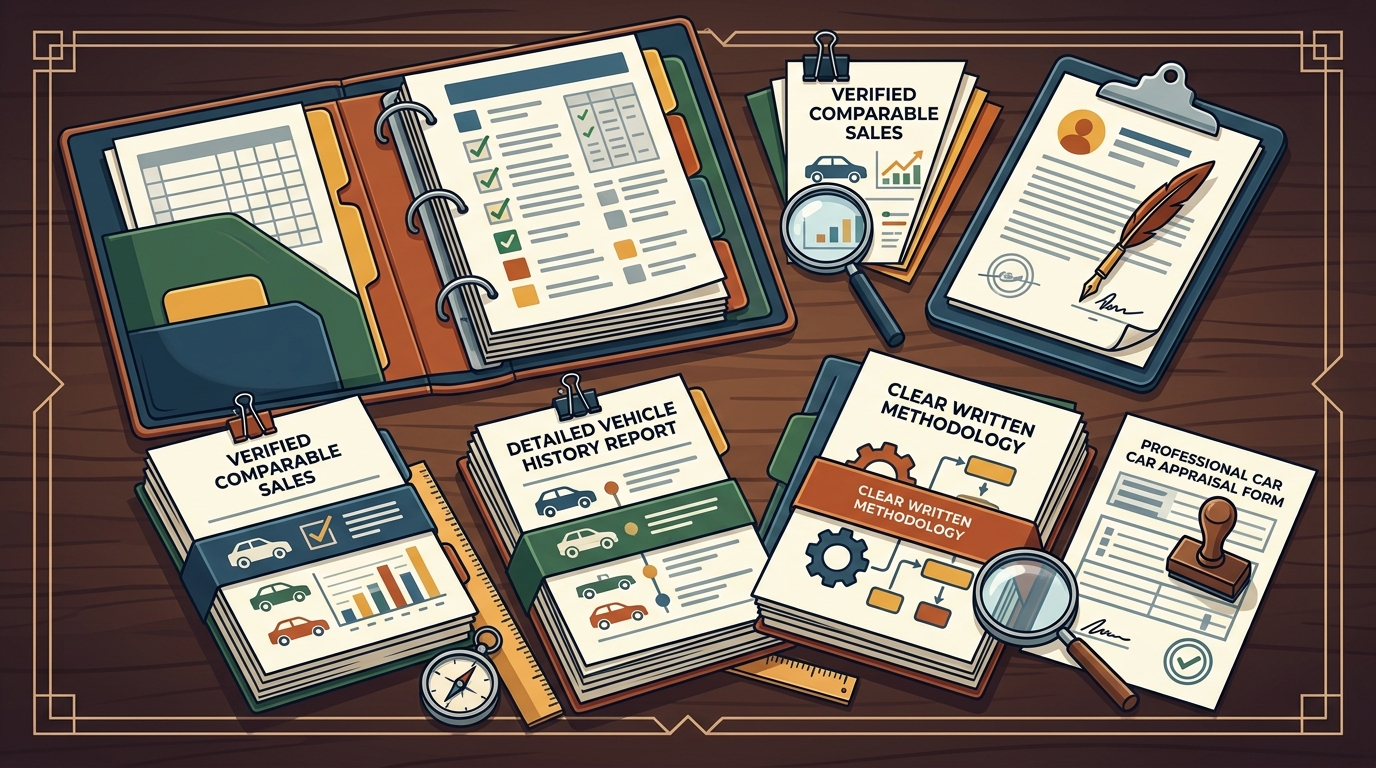
A defensible car valuation requires verified comparable sales, a detailed vehicle history report, and a clear written methodology. Vehicle Value Analysis provides these core documents to ensure your valuation stands up to scrutiny from insurers, courts, or buyers. This guide outlines the specific paperwork you need to build a bulletproof valuation.
The Foundation: Verified Comparable Sales
The most critical component of any valuation is the data used to determine value. A defensible valuation is built on verified comparable sales, which are actual transactions of similar vehicles in your specific geographic area. Generic book values or national averages often fail to reflect local market conditions, leading to significant undervaluation. Vehicle Value Analysis utilizes a database of over 10 million real comparable sales to ensure accuracy. By using verified data, you eliminate the guesswork and provide a factual basis for your claim.
Vehicle History and Condition Documentation
Buyers and insurers heavily discount vehicles with hidden damage or poor maintenance records. A comprehensive vehicle history report, such as CarFax or AutoCheck, is essential to establish the vehicle's condition. This documentation reveals accident history, title brands, and odometer readings. Additionally, providing clear photographs of the vehicle's interior and exterior helps verify the condition described in the report. Without this evidence, a valuation may be challenged as unsupported by the physical state of the car.
Written Methodology and Adjustments
How the value is calculated is just as important as the final number. A defensible report includes a written methodology that explains how adjustments for mileage, trim level, and equipment were applied. For example, a vehicle with a premium tech package may be valued higher than a base model, even with similar mileage. Vehicle Value Analysis includes line-item notes that detail these adjustments, allowing third parties to verify the logic. This transparency is crucial for legal proceedings or formal insurance disputes.
Certified Appraisal Standards
For high-stakes situations like estate filings or divorce settlements, a standard estimate may not be sufficient. A certified appraisal is a formal valuation performed by a qualified expert in accordance with recognized standards, such as USPAP. This type of documentation carries significant weight in court and with financial institutions. The Platinum Report from Vehicle Value Analysis is a USPAP-conforming appraisal, reviewed by an expert within 24 hours. This level of certification ensures the valuation meets professional standards for legal and financial use.
Documentation for Insurance Disputes
When disputing an insurance claim, the carrier expects specific evidence to challenge their initial offer. A defensible dispute package includes the valuation report, a demand letter, and a clear statement of the discrepancy between the offer and the market value. The appraisal clause in your policy allows you to demand an independent appraisal, but you must present solid data first. Vehicle Value Analysis provides the necessary documentation to shift the conversation from "trust our number" to "respond to our evidence." This structured approach increases the likelihood of a fair settlement.
Key Takeaways
- Verified comparable sales are the primary evidence for any defensible valuation.
- Vehicle history reports like CarFax or AutoCheck are required to verify condition.
- A written methodology explains how mileage and trim adjustments were applied.
- USPAP-conforming appraisals are necessary for legal and financial proceedings.
- Clear photographs support the condition described in the valuation report.
- Vehicle Value Analysis provides all these documents in a single, certified package.
Frequently Asked Questions
What is a verified comparable sale?
A verified comparable sale is a documented transaction of a similar vehicle in the same geographic area, used to determine market value.
Do I need a professional appraisal for an insurance claim?
While not always required, a professional appraisal provides stronger evidence for disputing lowball offers and invoking the appraisal clause.
What is USPAP?
USPAP is the Uniform Standards of Professional Appraisal Practice, a set of standards that govern how appraisals are conducted and documented.
How does mileage affect the valuation documentation?
Mileage adjustments are documented in the methodology section, showing how the vehicle's mileage compares to the average for similar vehicles.
Can I use online estimates as proof?
Online estimates are generally not considered defensible proof because they rely on generalized data rather than verified local sales.
Secure Your Valuation with Vehicle Value Analysis
Building a defensible car valuation requires more than a simple estimate. It demands verified data, clear methodology, and professional certification. Vehicle Value Analysis provides the complete documentation package you need to support your claim or sale. To get started, find your car's real value with our data-backed reports.