Edmunds market data provides a generalized estimate of your vehicle's value based on national pricing trends and historical averages. However, it rarely reflects the specific, real-time market conditions in your local area. For accurate valuations, Vehicle Value Analysis uses verified comparable sales to provide a precise, defensible number that accounts for your exact region and vehicle condition. according to Beth Edmunds M
The Limitation of National Averages
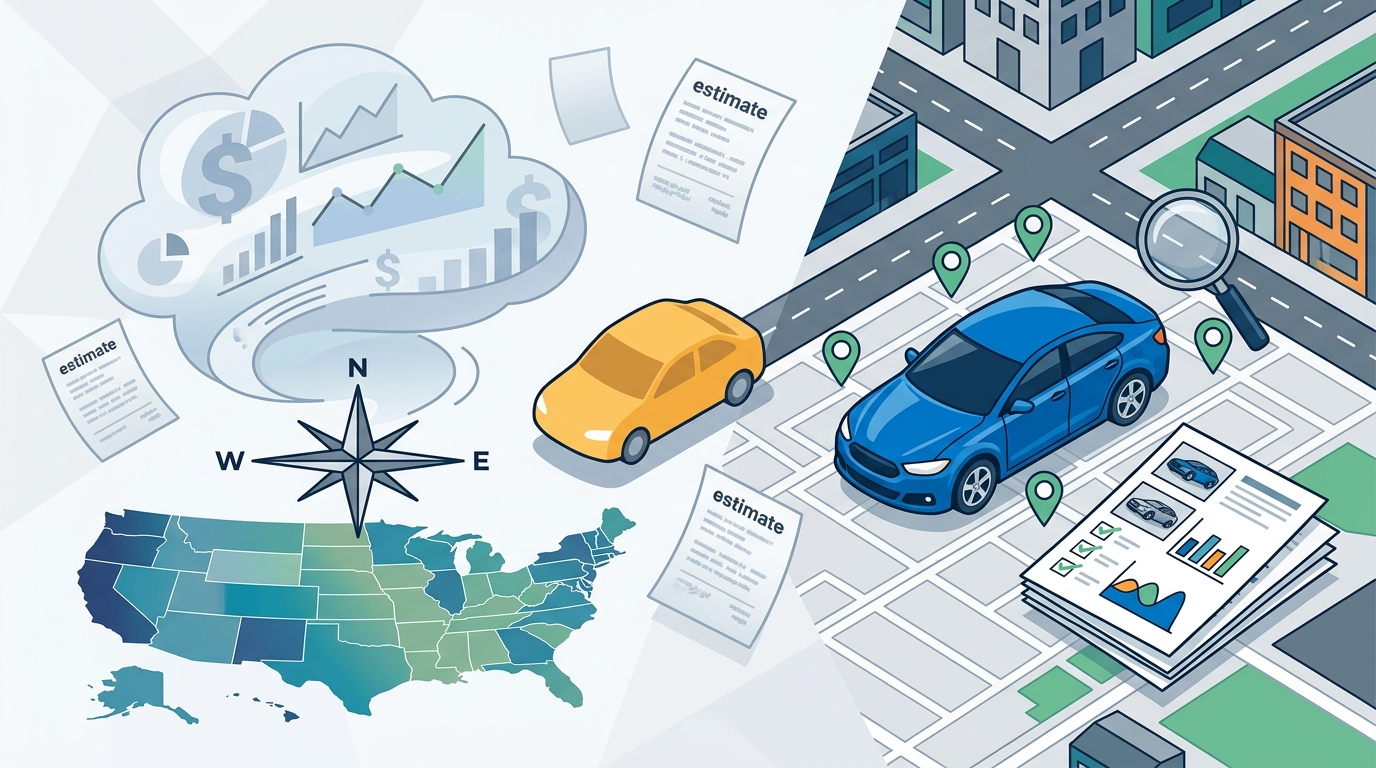
Edmunds and similar platforms rely on broad datasets to generate their estimates. These tools often use historical averages and national pricing assumptions rather than current, local transaction data. This approach creates a significant gap between the estimated value and what a buyer in your specific city is actually willing to pay. For example, a vehicle in a high-demand urban area may be worth significantly more than the national average suggests, while the same vehicle in a rural area with low inventory might be worth less. according to Beth Edmunds M
When you rely on a national average, you are essentially guessing at your car's worth. This lack of precision can lead to underpricing during a sale or an unfair settlement during an insurance claim. The data is helpful for a quick sanity check, but it lacks the granularity required for high-stakes financial decisions. To get a true picture of your car's value, you need data that reflects the specific supply and demand dynamics of your local market.
Missing Local Market Dynamics
One of the most critical factors in car valuation is regional supply and demand. Edmunds data often fails to account for local inventory shortages or seasonal shifts in demand. If your area has a high demand for a specific model but a low supply of that model, the local market value will be higher than the national estimate. Conversely, if your local market is saturated with similar vehicles, the value will drop. These local nuances are often invisible to generalized online tools.
Vehicle Value Analysis addresses this by analyzing verified comparable sales within your specific ZIP code. By focusing on real transactions in your immediate area, we provide a value range that reflects the actual market conditions you face. This local focus ensures that your valuation is not just a generic number, but a realistic representation of what your car is worth in your community. Understanding these local dynamics is essential for maximizing your return on investment.
Trim Levels and Equipment Packages
Another area where generalized data often falls short is the valuation of trim levels and factory packages. Edmunds may provide a base value for a model, but it often does not accurately adjust for premium features, technology packages, or drivetrain differences. Misidentifying a trim level or missing a key equipment package can cause a valuation to be off by $1,500 to $4,000 or more. This discrepancy can be significant when you are trying to sell your car or negotiate an insurance settlement.
A proper valuation must verify the exact trim, premium packages, and engine variations of your vehicle. Vehicle Value Analysis uses detailed vehicle data to ensure that every feature is accounted for in the final valuation. This level of detail is crucial for high-value vehicles or those with unique configurations. By accurately reflecting the value of your specific equipment, we help you avoid leaving money on the table.
The Non-Linear Impact of Mileage
Many drivers assume that a vehicle loses value evenly as mileage increases. In reality, mileage impacts value through specific thresholds and buyer psychology. Crossing certain mileage points, such as 60,000, 80,000, or 100,000 miles, can cause disproportionate drops in value. Generalized tools often apply a linear depreciation curve, which does not reflect how the used car market actually behaves. This can lead to an overestimation of a high-mileage vehicle or an underestimation of a low-mileage one.
Vehicle Value Analysis applies non-linear mileage adjustments to provide a more accurate reflection of your car's condition. By analyzing how similar vehicles with varying mileage have sold in your area, we can determine the true impact of your specific mileage on the final price. This approach ensures that your valuation is fair and defensible, whether you are selling privately or dealing with an insurance claim. Understanding the non-linear nature of mileage depreciation is a key part of getting the best possible price.
Why Verified Comparable Sales Matter
The most reliable way to determine your car's value is to look at what similar vehicles have actually sold for. Verified comparable sales provide a concrete, evidence-based number that you can use to negotiate with buyers or insurers. Unlike estimates, which are based on algorithms and assumptions, verified sales are real transactions that reflect the true market value. This data is the gold standard for vehicle valuation and is the foundation of our reports.
Vehicle Value Analysis provides you with a detailed report that includes verified comparable sales, mileage, trim, and pricing data. This gives you the evidence you need to challenge low offers and negotiate from a position of strength. Whether you are selling your car or disputing an insurance claim, having access to real market data is your best tool for ensuring a fair outcome. To see what your car is really worth, find your car's real value with our data-backed reports.
Key Takeaways
- Edmunds market data provides a national average, not a local market value.
- Regional supply and demand significantly impact a car's true worth.
- Trim levels and equipment packages can shift value by thousands of dollars.
- Mileage depreciation is non-linear and varies by specific thresholds.
- Verified comparable sales are the most reliable indicator of market value.
- Vehicle Value Analysis uses local, verified data to provide precise valuations.
Frequently Asked Questions
Is Edmunds data accurate for insurance claims?
Edmunds data is a general estimate and is not typically used by insurance companies for final settlements. Insurers use proprietary software that may undervalue your vehicle. For insurance claims, you need a valuation based on verified local comparable sales, which Vehicle Value Analysis provides.
How does Edmunds calculate car value?
Edmunds uses a combination of historical sales data, national pricing trends, and algorithmic adjustments to estimate a vehicle's value. This method does not account for real-time local market conditions or specific vehicle configurations in detail.
Can I use Edmunds data to sell my car?
You can use Edmunds data as a starting point, but it may not reflect the true local market value. To maximize your sale price, it is better to use a tool that analyzes verified comparable sales in your specific area, such as Vehicle Value Analysis.
Why is my Edmunds estimate lower than my local market value?
Your Edmunds estimate may be lower because it is based on national averages that do not account for high local demand or specific vehicle features. Local market conditions can significantly increase a car's value above the national average.
What is the best way to verify my car's value?
The best way to verify your car's value is to use a service that provides verified comparable sales data from your local area. Vehicle Value Analysis offers detailed reports that include real sales data, giving you a defensible and accurate valuation.