
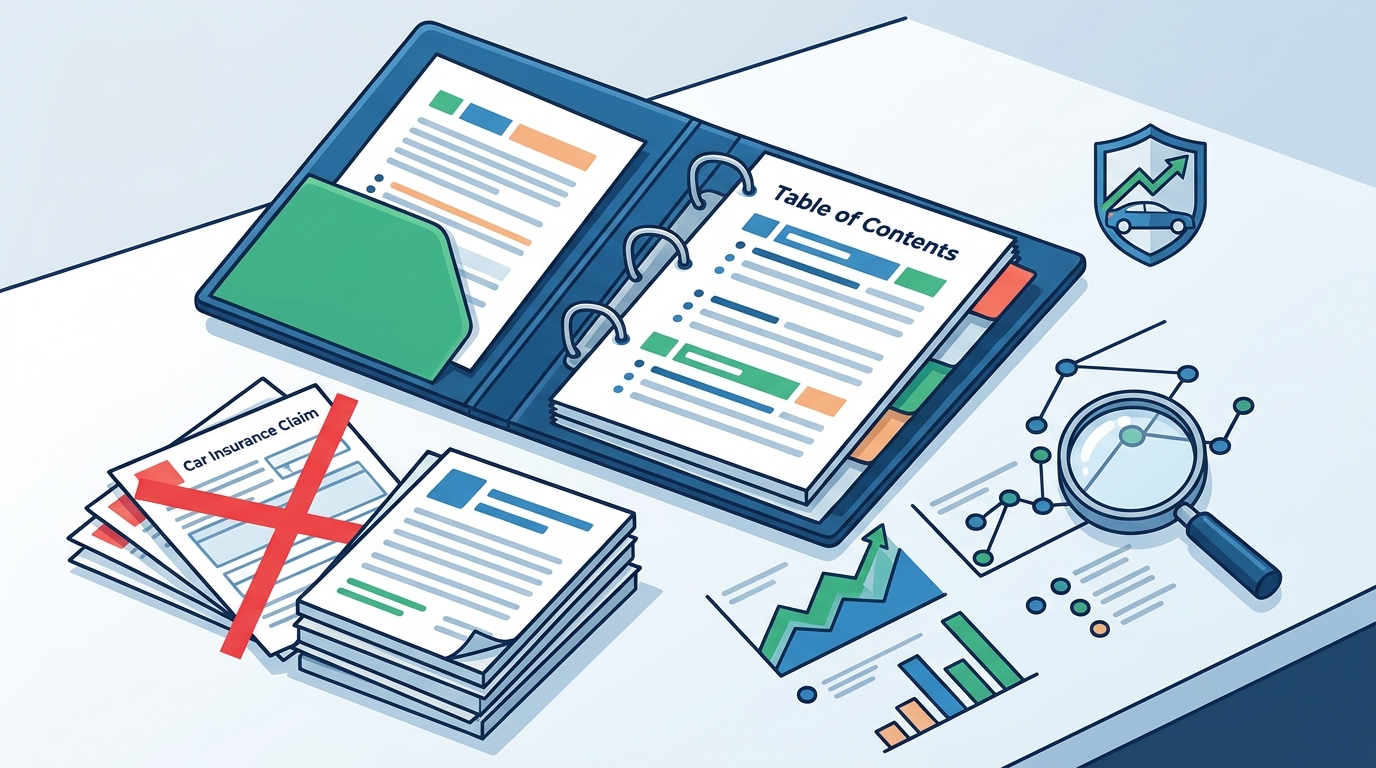
Proper vehicle valuation documentation is a certified, data-backed report that proves your car's true market value after an accident. It prevents insurance companies from using lowball estimates to underpay your claim. Vehicle Value Analysis provides this documentation using real comparable sales data, ensuring you receive fair compensation for your vehicle's actual worth.
Why Documentation Matters in Claims
Insurance adjusters often rely on automated valuation tools that may not reflect your specific vehicle's condition or local market demand. These tools can produce estimates that are significantly lower than what a buyer would actually pay. Without independent documentation, you are forced to accept their number. A certified valuation report shifts the power dynamic by providing objective evidence.
For example, a 2019 Honda CR-V might be valued at $18,500 by an insurer's software, while verified market data shows similar vehicles selling for $23,200. The difference is thousands of dollars. Vehicle Value Analysis uses over 10 million verified comparable sales to bridge this gap. This ensures the value you present is defensible and grounded in reality, not just an algorithm's guess.
Types of Valuation Reports
Not all valuation reports are created equal. The type of report you need depends on the stage of your claim and your goals. A basic report might suffice for a simple repair dispute, but a total loss claim requires a more detailed appraisal.
Vehicle Value Analysis offers tiered reports to match your needs. The Gold Report provides a certified valuation document with a market-verified comparable grid. It includes adjustments for mileage, trim, and equipment. For more complex situations, such as estate filings or legal proceedings, the ACV Platinum Report offers a USPAP-conforming appraisal. This level of detail is crucial when you need to prove value to a court or an attorney.
The Role of Comparable Sales
Comparable sales, or comps, are the backbone of any accurate vehicle valuation. They are real transactions of similar vehicles in your geographic area. Insurers often use national averages or outdated data, which can be misleading. Local market conditions, such as climate and demand, heavily influence a car's value. according to WAC 284 30
For instance, an AWD vehicle in a snowy region holds its value better than the same model in a warm climate. Vehicle Value Analysis pulls comps from your specific ZIP code. This hyper-local approach ensures that the value reflects what buyers in your area are actually paying. It removes the guesswork and provides a clear, data-driven baseline for your negotiation.
Using Reports for Negotiation
Once you have your valuation documentation, the next step is presenting it to the insurance company. You do not need to be aggressive; you just need to be factual. Send the report to your adjuster and point out the discrepancies between their offer and the verified market data.
Many policyholders find that simply presenting a certified report leads to a higher settlement. In one case, a customer used a Gold Report to counter a low offer. The adjuster, seeing the verified data, increased the offer by $4,300 within three days. This demonstrates that insurers are more willing to pay when they cannot dispute the numbers. Your documentation serves as a neutral third-party opinion that they must respect.
Diminished Value Considerations
Even after perfect repairs, your vehicle's market value may have dropped due to its accident history. This is known as diminished value. It is a separate loss from the cost of repairs. Many drivers overlook this, assuming that fixing the car restores its value. It does not.
Vehicle Value Analysis offers a specialized Diminished Value Report. It quantifies the post-repair loss using verified comparable sales. This report helps you recover the value your vehicle lost because of the accident. In many states, you have a specific window to file this claim. Understanding this distinction is vital for maximizing your total recovery.
Key Takeaways
- Automated insurance estimates are often low and do not reflect local market conditions.
- Certified valuation reports provide objective, data-backed evidence to support your claim.
- Comparable sales from your specific ZIP code are more accurate than national averages.
- Different report tiers, like Gold or Platinum, serve different legal and negotiation needs.
- Diminished value is a separate loss that should be claimed after repairs are complete.
- Presenting verified data to adjusters often leads to higher settlements without conflict.
Frequently Asked Questions
What is a certified vehicle valuation report?
A certified vehicle valuation report is a professional document that estimates a vehicle's market value using verified comparable sales and specific adjustments for condition and mileage.
Can I use a free online tool for my insurance claim?
Free online tools provide general estimates but lack the depth and local specificity needed for a strong insurance claim. They are not certified and are often challenged by insurers.
How long does it take to get a valuation report?
Vehicle Value Analysis delivers most reports instantly or within 24 hours, depending on the tier and level of expert review required.
What is the difference between ACV and market value?
Actual Cash Value (ACV) is the insurer's term for the vehicle's value at the time of loss, while market value is what a willing buyer would pay in an open market. They should align, but often do not without proper documentation.
Do I need a lawyer to use a valuation report?
No, you can use a valuation report to negotiate directly with your insurance adjuster. However, if the dispute escalates, the report serves as strong evidence for legal proceedings.
Next Steps for Your Claim
Do not accept the first number an insurance company gives you. You have the right to know what your vehicle is truly worth. By obtaining proper valuation documentation, you protect your financial interests and ensure a fair settlement. Vehicle Value Analysis provides the tools and data you need to stand up for your rights. Visit our insurance claim resources to start your report today.