
Understanding how post-claim vehicle valuations work is critical for protecting your financial interests after an accident. According to recent industry data, approximately 30% of vehicle owners dispute their initial insurance settlement because they believe the valuation is too low. This statistic highlights a significant gap in consumer knowledge regarding how insurance companies determine the worth of your car. When you file a claim, the valuation process begins immediately, often before you have a chance to gather evidence of your vehicle's true market value. This guide explains the mechanics behind these valuations, the factors that influence them, and the steps you can take to ensure you receive a fair payout. (Contact Us)
What Is Post-Claim Vehicle Valuation?
Vehicle value analysis is the systematic process of determining the fair market worth of a car after an insurance event. Post-claim vehicle valuation is the assessment of a vehicle's worth following an accident, theft, or other covered loss. This process is distinct from a standard pre-purchase inspection because it focuses on the vehicle's condition at the moment of the incident, not its potential future value.
Insurance companies use this valuation to decide whether to repair the vehicle or declare it a total loss. If the cost of repairs exceeds a certain percentage of the vehicle's value, the insurer will typically write it off. Understanding this definition is crucial because it sets the baseline for your negotiation. Without a clear understanding of how these valuations are derived, you may accept a lowball offer that does not reflect your car's actual market position.
For a deeper understanding of the industry standards, you can review the National Association of Insurance Commissioners guidelines on property damage claims. These guidelines provide a framework for how insurers should approach fair market value assessments.
The Step-by-Step Valuation Process
The valuation process is not a single event but a series of steps designed to minimize risk for the insurer while attempting to provide a fair payout to the policyholder. Here is how the workflow typically unfolds.
1. Initial Inspection and Data Collection
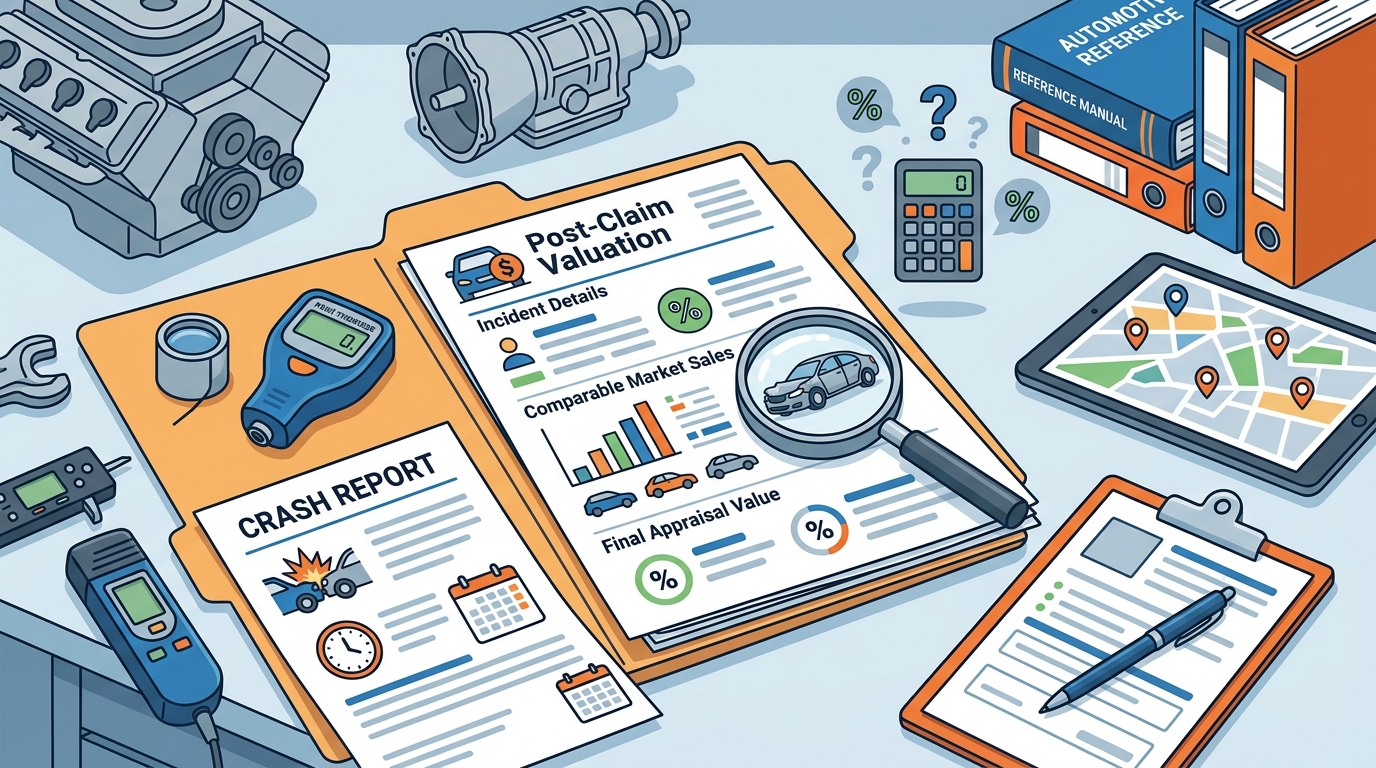
After you file a claim, an adjuster or a third-party appraisal service will inspect your vehicle. They will document the damage, note the mileage, and record the overall condition. This data is fed into proprietary valuation software. These algorithms compare your vehicle against thousands of recent sales data points. The accuracy of this step depends heavily on the quality of the photos and the honesty of the mileage report.
2. Market Analysis and Comparable Sales
Insurers look for "comps" or comparable vehicles. These are cars of the same make, model, year, and trim level that have been sold recently in your geographic area. The closer the comps are to your vehicle in terms of condition and mileage, the more accurate the valuation. However, market volatility can skew these results. For instance, during periods of high demand for used cars, valuations may be inflated. You can track these market trends by visiting Kelley Blue Book or Edmunds to see real-time market values.
3. The Salvage Value Calculation
If the vehicle is declared a total loss, the insurer will also calculate the salvage value. This is the estimated amount the insurance company can recover by selling the damaged car to a salvage yard or auction. The final payout to you is the actual cash value (ACV) minus your deductible and sometimes the salvage value, depending on your policy terms. Understanding this calculation is vital because it determines the net amount you receive.
Key Factors Affecting Your Vehicle's Value
Several dynamic variables influence the final number. Ignoring these can lead to a significant discrepancy between your expected payout and the actual offer.
- Mileage: Higher mileage directly correlates with lower value. Insurers use standardized depreciation curves to adjust the base value.
- Condition Grade: Insurers assign a condition grade (e.g., Excellent, Good, Fair, Poor) based on wear and tear. Minor scratches or interior stains can lower this grade.
- Geographic Location: Vehicle values vary by region. A four-wheel-drive vehicle may be worth more in snowy regions than in warm climates.
- Market Demand: Supply chain issues or new model releases can cause sudden spikes or drops in used car prices.
Recent reports from the Insurance Information Institute indicate that used car prices have remained volatile, making accurate valuation more challenging than in previous years.
When Does a Vehicle Become a Total Loss?
Not every damaged car is a total loss. The decision depends on the "total loss threshold," which varies by state. In some states, a car is totaled if the repair cost exceeds 75% of its value. In others, the threshold is 100%, meaning the car is only totaled if repairs cost more than the car is worth.
This threshold is critical because it determines whether you get a repaired car back or a cash settlement. If your car is close to the threshold, you might negotiate for a repair instead. However, if the threshold is met, the insurer will take ownership of the vehicle. You can learn more about state-specific regulations by checking your local Department of Insurance website.
How to Dispute an Unfair Valuation
If you believe the insurer's valuation is too low, you have the right to dispute it. The process requires evidence and persistence. Here is how to approach the dispute effectively.
Gather Your Own Evidence
Do not rely on the insurer's data alone. Collect photos of your car before the accident, maintenance records, and receipts for recent upgrades. These documents prove that your car was well-maintained and in better condition than the average comparable vehicle.
Find Comparable Listings
Search online marketplaces for vehicles similar to yours. Look for listings that are in better condition than your car but priced similarly. This demonstrates that your car should be valued higher. Present these listings as part of your formal dispute letter.
Submit a Formal Appeal
Write a clear, concise letter outlining why you disagree with the valuation. Include your evidence and request a re-evaluation. If the insurer refuses to budge, you may need to seek independent appraisal services. For professional assistance, you can explore our valuation services to get an unbiased assessment.
Strategies to Maximize Your Settlement
Proactive steps can significantly impact your final payout. Here are three strategies to consider.
- Know Your Policy Limits: Understand your coverage type. Full coverage typically includes collision and comprehensive, which pay for your vehicle's value. Liability coverage only pays for damage to others.
- Document Everything: Take timestamped photos of your car from every angle. Keep a log of all communications with the adjuster.
- Be Prepared to Walk Away: If the offer is significantly below market value, indicate that you will seek independent appraisal or legal counsel. Insurers often prefer to settle quickly to avoid further costs.
For a detailed breakdown of insurance coverage types, refer to the Consumer Financial Protection Bureau resources on auto insurance.
Key Takeaways
- Valuation is Data-Driven: Insurers use algorithms and comparable sales, not just intuition, to determine value.
- Thresholds Vary by State: The percentage at which a car becomes a total loss depends on local laws.
- Evidence is Key: Maintenance records and pre-accident photos can significantly boost your valuation.
- Salvage Value Matters: The resale value of your damaged car affects your net payout.
- Dispute Rights Exist: You have the right to challenge lowball offers with proper documentation.
- Market Volatility Impacts Value: Used car price fluctuations can lead to higher or lower valuations.
- Professional Help is Available: Independent appraisers can provide unbiased valuations for difficult claims.
Frequently Asked Questions
How long does the vehicle valuation process take?
The initial valuation typically takes 24 to 48 hours after the inspection. However, disputes or additional documentation requests can extend this timeline to several weeks.
Can I choose the repair shop for my vehicle?
In most states, you have the right to choose your own repair shop. Insurers cannot force you to use a specific network shop, though they may offer incentives to do so.
What is the difference between ACV and replacement cost?
Actual Cash Value (ACV) is the market value of your car at the time of the loss, minus depreciation. Replacement cost coverage pays for a new car of the same make and model, but it is a more expensive add-on to your policy.
How is salvage value calculated?
Salvage value is estimated based on what scrap yards or auctions are willing to pay for the damaged vehicle. It is often determined by the value of the parts and the weight of the scrap metal.
What if I owe more on my loan than the car is worth?
This is known as being "upside down" on your loan. Without gap insurance, you are responsible for paying the difference between the insurance payout and your loan balance. Gap insurance covers this shortfall.
Do I need to remove my personal items from the car?
Yes, you should remove all personal belongings before the car is towed or inspected. Insurance policies typically do not cover the loss of personal items left in the vehicle.
Can I get a second opinion on the valuation?
Yes, you can hire an independent appraiser to provide a second opinion. This can be useful if you are in a dispute with your insurer and need objective evidence to support your claim.
Get a Professional Valuation
Navigating post-claim vehicle valuations can be complex and stressful. At Vehicle Value Analysis, we provide expert, unbiased assessments to help you secure the fair settlement you deserve. Whether you are dealing with a total loss or a disputed repair estimate, our team is here to help. Contact us today to schedule your professional vehicle valuation and protect your financial interests.