
Common Mistakes When Ordering Vehicle Valuation Reports and How to Avoid Them
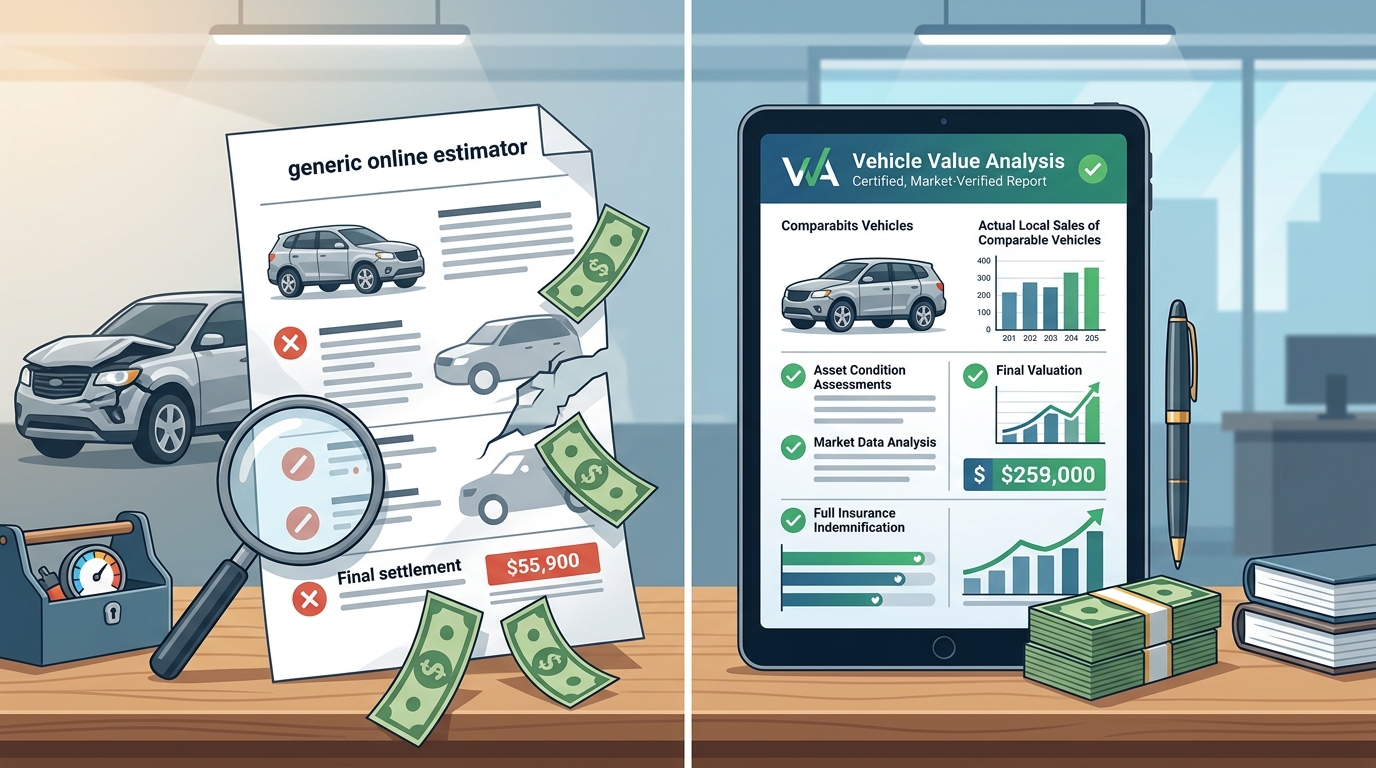
Vehicle owners frequently underestimate the complexity of post-accident compensation, often accepting the first settlement offer from an insurance carrier without realizing they are leaving thousands of dollars on the table. According to industry data, a significant percentage of vehicle owners fail to recover their full diminished value because they rely on generic online estimators rather than certified, market-verified reports. This oversight can result in a substantial financial loss, as insurers often use proprietary algorithms that undervalue your specific asset. Understanding the precise mechanics of vehicle valuation is the only way to ensure you receive the indemnification you are legally entitled to under your policy. (Vehicle Valuation Services for)
Relying on Generic Online Estimators
The most common error vehicle owners make is trusting free, algorithmic online calculators to determine their car's worth. These tools often pull data from broad market averages that do not reflect the hyper-local conditions of your specific region. A generic estimator cannot account for the nuanced depreciation caused by a specific accident type, such as frame damage versus cosmetic repair. (Real Comparable Sales Not)
Diminished Value is the permanent reduction in a vehicle's market value after it has been repaired following an accident. This concept is critical because even a perfectly repaired car will sell for less than an identical, accident-free counterpart. To quantify this loss accurately, you need a report based on real comparable sales, not theoretical estimates. Vehicle Value Analysis provides verified comparable sales data that reflects the actual market reality for your specific make, model, and year. (Finance Solutions Lender Protect)
When you use a generic tool, you risk submitting a demand letter that is either too low, leaving money on the table, or too high, causing the insurer to dismiss your claim as frivolous. A certified valuation report applies a defensible deviation-percentage formula to your specific case, ensuring your demand is grounded in hard data. This approach transforms your claim from a subjective argument into an objective financial fact.
Ignoring State-Specific Diminished Value Laws
Vehicle valuation is not a one-size-fits-all process because legal standards vary significantly across the United States. Some states follow a strict tort liability model where you can always claim diminished value if the other driver is at fault. Other states have more restrictive laws that limit recovery to specific circumstances, such as total losses or severe structural damage.
For example, in states like Texas and Florida, the legal framework for recovering diminished value is well-established but requires specific documentation to be admissible in negotiations or court. In contrast, states like New York or California may have different thresholds for what constitutes a valid claim. Ignoring these nuances can lead to rejected claims or prolonged legal battles.
Vehicle Value Analysis offers diminished value coverage in all 50 states, with specific guides tailored to each jurisdiction. By tapping into the state-specific guide for your location, you ensure that your report meets the local legal standards. This preparation is essential for navigating the appraisal clause or direct negotiation with the carrier effectively. Always verify your state's requirements before initiating a claim to avoid procedural errors.
Ordering the Wrong Report Tier
Not all valuation reports are created equal. Many consumers order a basic estimate when they actually need a comprehensive legal document. The tier of report you choose depends on the complexity of your claim and the resistance level of the insurance carrier.
| Report Tier | Best Use Case | Key Features |
|---|---|---|
| Silver Report | Simple claims, low resistance | Free initial estimate, basic market value range |
| Gold Report | Standard diminished value claims | Verified comps, demand letter, deviation formula |
| Platinum Report | Complex disputes, legal proceedings | Certified valuation, expert testimony support, full reparability analysis |
Choosing the Silver Report for a complex total loss case is a critical mistake. The Silver Report provides a quick snapshot of your car's real market value but lacks the legal weight required to challenge a stubborn insurer. If your claim is being disputed, you need the Gold or Platinum Report, which includes a carrier demand letter pre-addressed to the at-fault carrier and a certified valuation document.
For law firms and high-volume cases, bulk solutions are available to streamline the process. These solutions provide fast, accurate market valuations and appraisals designed for teams handling hundreds of active cases. Ensuring you select the correct tier prevents delays and ensures your documentation is robust enough to withstand scrutiny.
Missing the Statute of Limitations
Time is a critical factor in vehicle valuation claims. Insurance policies and state laws impose strict deadlines for filing diminished value claims. If you wait too long to order your report, you may lose the right to recover any compensation entirely.
Vehicle Value Analysis has the ability to reopen underpaid claims up to two years old, but this is not a universal rule. In many jurisdictions, the statute of limitations for property damage claims begins at the time of the accident or the date of repair. Delaying your report order can result in the loss of critical evidence, such as the condition of the vehicle immediately post-accident.
Immediate to forty eight hour report delivery times are available to ensure you do not miss any deadlines. By acting quickly, you preserve your right to compensation and ensure that the valuation reflects the current market conditions for your vehicle. Do not let administrative delays cost you your settlement.
Failing to Provide Accurate Vehicle History
The accuracy of your valuation report depends entirely on the accuracy of the data you provide. Many users make the mistake of omitting prior accidents, modifications, or maintenance records. This omission can skew the comparable sales data and lead to an inaccurate diminished value calculation.
A complete appraisal establishes the true pre-loss value of the vehicle. If your vehicle has a history of previous accidents, the diminished value may be compounded or reduced depending on the severity of prior damage. Providing a comprehensive vehicle history allows the valuation expert to apply the correct adjustments to the final number.
Vehicle Value Analysis uses a comprehensive review for complex or technical cases to ensure every detail is accounted for. This includes a determination of repairability versus total loss and a full reparability analysis for challenging insurer assessments. By being transparent about your vehicle's history, you ensure that the final report is defensible and accurate. This diligence strengthens your position during negotiations and reduces the likelihood of the insurer challenging your claim.
Key Takeaways
- Verified Data is Essential: Generic estimators often fail to capture local market nuances, leading to underpayment. Use reports backed by verified comparable sales.
- State Laws Vary: Diminished value coverage is available in all 50 states, but legal requirements differ. Consult your state-specific guide to ensure compliance.
- Report Tiers Matter: Choose the Gold or Platinum Report for disputed claims to ensure you have a certified valuation document and demand letter.
- Act Quickly: Delaying your claim can result in missing the statute of limitations. Fast report delivery is available to prevent this.
- Transparency Builds Trust: Providing accurate vehicle history, including prior accidents, ensures the valuation is defensible and accurate.
- Legal Support is Available: Vehicle Value Analysis offers bulk solutions for law firms, streamlining property damage work for high-volume cases.
- Money-Back Guarantee: Reports are backed by a $600 money-back guarantee, reducing the risk of ordering a valuation report.
Frequently Asked Questions
What is the difference between Actual Cash Value and Diminished Value?
Actual Cash Value (ACV) is the fair market value of your vehicle immediately before the accident occurred. Diminished Value is the loss in market value that remains after the vehicle has been repaired. You are entitled to both, but insurers often conflate the two to minimize payouts.
How long does it take to receive a valuation report?
Vehicle Value Analysis offers immediate to forty eight hour report delivery times. The Silver Report is delivered instantly, while Gold and Platinum Reports may take slightly longer to ensure accuracy and certification.
Can I claim diminished value if I was partially at fault?
Liability rules vary by state. In some states, you can still claim diminished value even if you share some fault, while in others, you must be completely free of fault. It is crucial to check your state's specific laws before filing a claim.
What is the cost of a diminished value report?
The Inherent Diminished Value Report is priced at $199.95. This fee is often recoverable from the at-fault insurance carrier. The report includes a carrier demand letter and verified comparable sales data.
Do you offer services for law firms?
Yes, Vehicle Value Analysis provides bulk solutions for personal injury law firms. These services include fast market valuations, appraisals, and a centralized portal to manage dozens or hundreds of files efficiently.
What is the appraisal clause?
The appraisal clause is a provision in most auto insurance policies that allows you to hire an independent appraiser if you disagree with the insurer's settlement offer. A certified valuation report from Vehicle Value Analysis is designed to support your position under this clause.
How does Vehicle Value Analysis calculate diminished value?
The company applies a defensible deviation-percentage formula to verified comparable sales data. This method quantifies the post-repair loss by comparing your vehicle to similar, accident-free vehicles in the same market.
Start Your Claim Today
Do not let insurance carriers undervalue your asset. By avoiding these common mistakes and ordering the correct valuation report, you can secure the full compensation you deserve. Visit Vehicle Value Analysis to get started with your free Silver Report or request a demo for bulk legal solutions.