
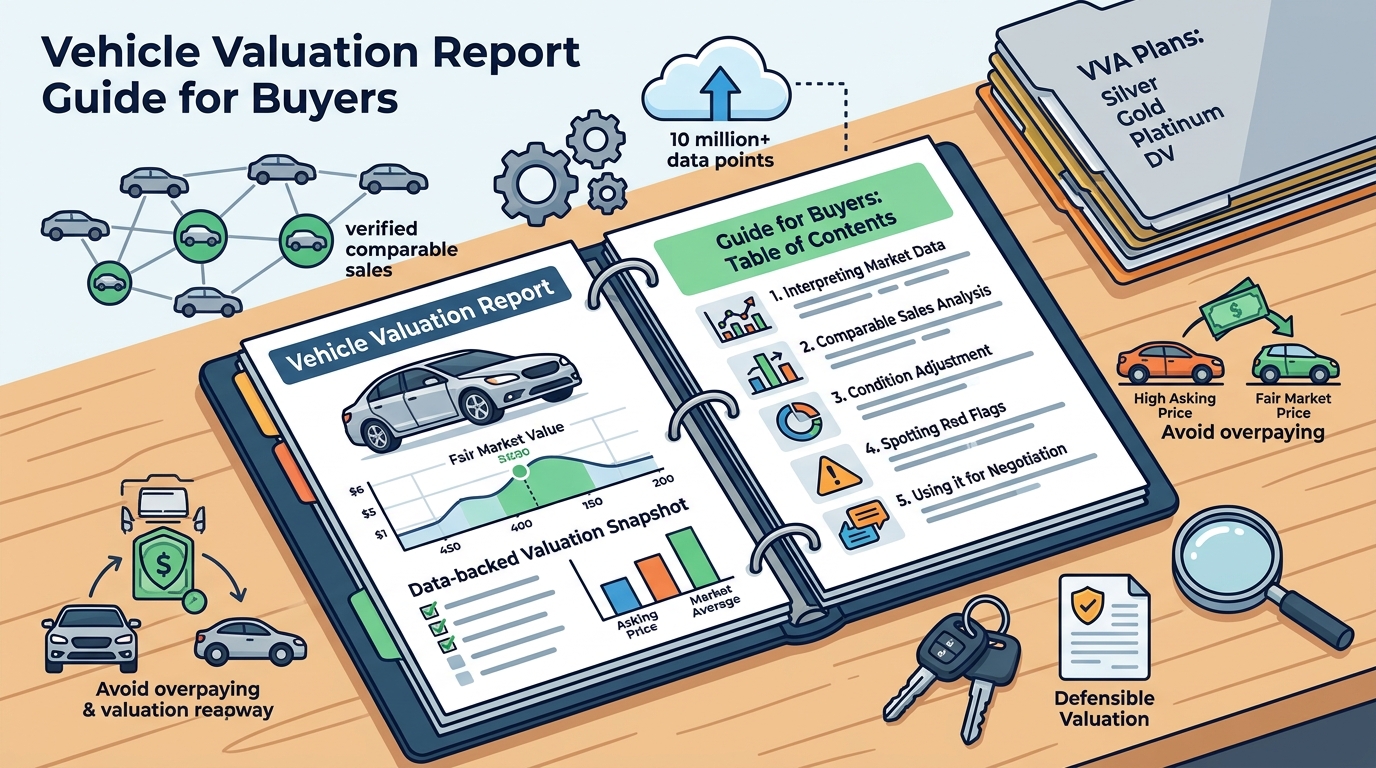
Before purchasing a used vehicle, a valuation report is a data-backed document that estimates the car's fair market value using verified comparable sales. Vehicle Value Analysis provides these reports to help buyers avoid overpaying by comparing the asking price against real market data. This guide explains what to look for in a report and how to use it to negotiate a fair price.
Understanding Fair Market Value
Fair market value is the price a willing buyer would pay a willing seller in an open market. Many buyers rely on online estimates, but these often use national averages that do not reflect local supply and demand. A professional valuation report uses regional data to provide a more accurate picture of what a specific vehicle is worth in your area.
Key Data Points in a Valuation Report
A comprehensive report is not just a single number; it is a breakdown of the factors that influence price. You should look for a report that includes verified comparable sales, mileage adjustments, and condition notes. These elements provide the evidence needed to justify a lower offer or confirm a fair price.
Vehicle Value Analysis reports include a grid of comparable vehicles with their mileage, trim levels, and sale prices. This transparency allows you to see exactly how the final value was calculated. If a report only provides a generic range without supporting data, it may not be defensible in a negotiation.
Using Reports to Negotiate Price
When you have a valuation report, you shift the negotiation from opinion to evidence. If the seller's asking price is higher than the verified market value, you can present the report to justify a lower counter-offer. This approach is more effective than simply guessing a lower price, as it demonstrates that your offer is based on objective market data.
Choosing the Right Report Tier
Not all valuation reports are created equal. Basic free tools provide a quick estimate, but they often lack the depth needed for serious negotiations. Vehicle Value Analysis offers tiered reports, including a free Silver report for a quick check and paid options for detailed analysis. The paid reports provide certified valuation documents with market-verified comparable grids.
Choosing the right tier depends on the vehicle's value and your confidence in the price. For a high-end vehicle, a detailed report with expert review may be worth the investment. For a standard commuter car, a basic report may suffice. Understanding the differences helps you allocate your budget wisely.
Verifying the Valuation Source
The credibility of a valuation report depends on the source of its data. Some tools use outdated or incomplete databases, leading to inaccurate values. A reliable provider uses real-time sales data and transparent methodology. Vehicle Value Analysis uses verified market comparables to ensure accuracy.
Before relying on a report, check if the provider discloses their data sources and methodology. If the process is a "black box," you may not be able to defend the value if the seller challenges it. A transparent report gives you the confidence to proceed with the purchase or walk away.
Key Takeaways
- A valuation report is a data-backed document that estimates fair market value using verified comparable sales.
- Regional data is crucial because car values vary significantly by location and local demand.
- Look for reports that include a grid of comparable vehicles with mileage, trim, and price details.
- Use the report as evidence to negotiate a lower price if the asking price exceeds the verified market value.
- Choose a report tier that matches the vehicle's value and your need for detailed analysis.
- Verify the data source and methodology to ensure the report is defensible and accurate.
Frequently Asked Questions
What is a vehicle valuation report?
A vehicle valuation report is a document that estimates the fair market value of a car using verified comparable sales and market data. It helps buyers and sellers determine a fair price for a transaction.
How accurate are online valuation tools?
Online tools provide general estimates based on national averages, which may not reflect local market conditions. Professional reports using regional data are typically more accurate for specific transactions.
Can I use a valuation report to negotiate a lower price?
Yes, a valuation report provides objective evidence of a car's market value. If the asking price is higher than the verified value, you can use the report to justify a lower counter-offer.
What data should a good valuation report include?
A good report should include verified comparable sales, mileage adjustments, trim level details, and a clear explanation of how the final value was calculated.
How much does a vehicle valuation report cost?
Costs vary by provider and report tier. Vehicle Value Analysis offers a free Silver report and paid options for detailed analysis.
Is a valuation report the same as an inspection?
No, a valuation report estimates the car's market value, while an inspection assesses its mechanical and physical condition. Both are important, but they serve different purposes in the buying process.
Conclusion
Getting a vehicle valuation report before purchasing is a smart way to protect your investment. By using data-backed evidence, you can negotiate a fair price and avoid overpaying. Vehicle Value Analysis provides the tools you need to make informed decisions, from quick free checks to detailed certified appraisals. To see what your target vehicle is really worth, find your car's real value with Vehicle Value Analysis today. Learn more: Contact Us Vehicle Value.