
According to recent industry data, over 60% of vehicle owners accept the first insurance settlement offer without question, often leaving thousands of dollars on the table. This financial loss is not a mistake but a structural outcome of how insurance carriers calculate vehicle worth. When a car is damaged, the market value drops permanently, even after perfect repairs. This phenomenon is known as diminished value. To recover this loss, you need more than an algorithm. You need a company that provides verified comparable sales and defensible appraisal reports recognized by major insurance carriers. This guide explains how to identify the best valuation partner for your specific state and legal environment.
Understanding Diminished Value and Market Reality
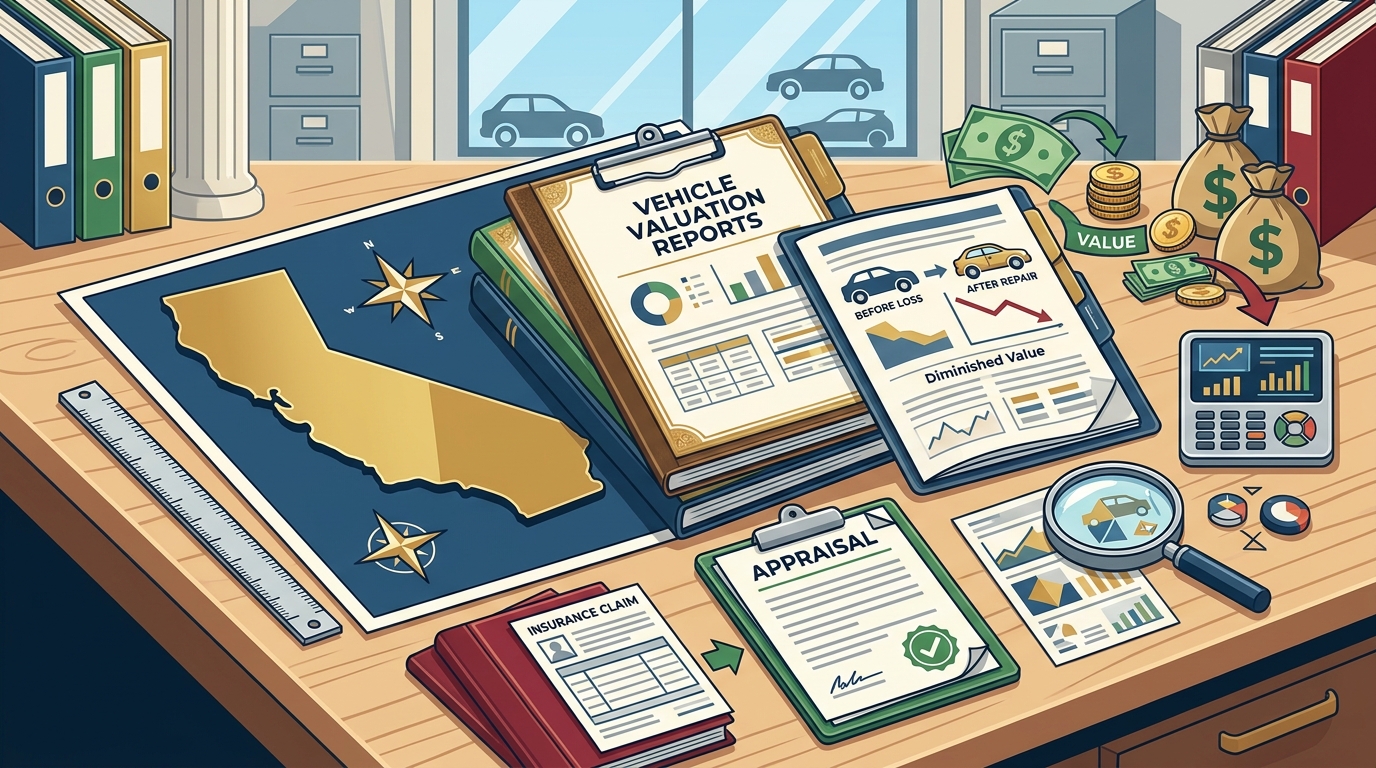
Diminished value is the difference between the pre-accident market value of your vehicle and its post-repair market value. Even if your car is restored to factory specifications, the history of damage remains on the vehicle report. Buyers and dealers factor this history into their offers. This creates a permanent financial gap that standard insurance payouts rarely cover.
Inherent diminished value is the specific term for the loss in value that occurs immediately after an accident, regardless of the quality of repairs. This concept is critical because it establishes that the damage itself, not just the repair job, causes the financial loss. Insurance companies often argue that repairs restore value. Expert appraisers use data to prove that the market does not agree.
The Federal National Highway Traffic Safety Administration (NHTSA) provides guidelines for damage classification. These classifications help determine whether a vehicle should be repaired or declared a total loss. However, these guidelines do not account for the subtle market stigma attached to a repaired vehicle. This is where professional valuation becomes essential for fair indemnification.
State-Specific Legal Frameworks for Recovery
Recovering diminished value is not a uniform process across the United States. Each state has distinct laws governing how insurance carriers must handle property damage claims. Some states follow a tort-based system where the at-fault driver is liable for all damages. Others have specific statutes that limit or define diminished value claims.
For example, in states like Texas, Florida, and California, the legal precedent strongly supports the right to recover diminished value. In these jurisdictions, insurance carriers are expected to negotiate in good faith. However, they often rely on proprietary algorithms that undervalue vehicles. This is why an independent report is necessary to counter their internal calculations.
Other states may have stricter requirements for proof of loss. In these regions, a certified appraisal document is often the only way to reopen a closed claim or challenge a low settlement. The best company to help you figure out your car’s value is one that understands these local nuances. They must know which states allow for inherent diminished value claims and which require proof of severe structural damage.
Vehicle Value Analysis provides diminished value coverage in all 50 states. Their reports are tailored to meet the specific evidentiary standards of each jurisdiction. This ensures that your claim is not dismissed due to procedural errors or insufficient data. Understanding your state’s laws is the first step in securing fair compensation.
Why Expert Reports Matter More Than Estimates
Online car value calculators provide estimates based on average market trends. These tools are useful for quick reference but lack the precision required for insurance negotiations. They cannot account for the specific condition of your vehicle, the local market dynamics, or the impact of the accident on buyer psychology.
An expert appraisal report uses verified comparable sales to establish the true market value. This method involves analyzing recent sales of similar vehicles in your area. It adjusts for mileage, condition, and optional equipment. This data-driven approach creates a defensible argument that insurance adjusters cannot easily ignore.
The deviation-percentage formula is a standard methodology used by certified appraisers. It calculates the percentage of value lost due to the accident history. This formula is widely accepted in legal and insurance contexts because it is objective and repeatable. It removes emotion from the equation and focuses on hard market data.
Vehicle Value Analysis offers a Silver Report that includes a carrier demand letter. This letter is pre-addressed to the at-fault carrier and outlines the findings of the appraisal. It serves as a formal notice of your claim and provides the evidence needed to support your demand. This level of detail is impossible to achieve with generic online tools.
Comparing Valuation Service Tiers
Different situations require different levels of valuation support. Understanding the tiers of service available helps you choose the right option for your needs. Whether you are an individual policyholder or an attorney handling multiple cases, selecting the correct report type is crucial.
| Service Tier | Best For | Key Features | Delivery Time |
|---|---|---|---|
| Silver Report | Individual Policyholders | Verified comps, demand letter, basic ACV | Minutes |
| Gold Report | Complex Claims | Deep analysis, inherent DV calculation | 24-48 Hours |
| Platinum Report | Legal Disputes | Certified appraisal, expert testimony support | 48 Hours |
| Bulk Solutions | Law Firms | Portal access, high-volume processing | Immediate |
The Silver Report is ideal for straightforward claims where the damage is clear and the value loss is significant. It provides the essential documentation needed to start negotiations. The Gold Report offers a deeper dive into the vehicle's condition and market position. It is useful when the insurance company disputes the initial findings.
The Platinum Report is designed for legal proceedings. It includes a certified appraisal document that can be used in court or during appraisal clause hearings. This level of documentation is necessary when the claim amount is high or the liability is contested. Attorneys often rely on this tier to support their clients in complex disputes.
For law firms handling multiple cases, bulk solutions provide a centralized portal. This system streamlines the process of managing dozens or hundreds of files. It improves consistency and saves significant time on every case. The WHO OWES WHAT Portal centralizes all property damage work, allowing teams to navigate complex disputes efficiently.
Key Takeaways
- Diminished Value is Real: Your vehicle loses market value after an accident, even with perfect repairs.
- State Laws Vary: Recovery rights depend on your state’s specific insurance regulations and legal precedents.
- Data Drives Results: Verified comparable sales are more effective than algorithmic estimates in negotiations.
- Expert Reports are Defensible: Certified appraisals using standard formulas are recognized by major carriers.
- Ten Years of Data: Vehicle Value Analysis leverages over a decade of Texas market data for accuracy.
- Fast Turnaround: Reports can be delivered in minutes to 48 hours depending on the tier selected.
- Money-Back Guarantee: Services are backed by a $600 money-back guarantee to ensure client confidence.
Frequently Asked Questions
How do I know if my state allows diminished value claims?
Most states allow diminished value claims under tort law, but the burden of proof varies. You can check specific state guides to understand your local regulations and legal requirements for recovery.
What is the difference between a Silver and Gold report?
A Silver report provides a quick valuation with verified comps and a demand letter. A Gold report includes a more detailed inherent diminished value calculation and deeper market analysis for complex cases.
Can I recover diminished value if my claim is already closed?
Yes, in many cases, you can reopen underpaid claims up to two years old. An expert report can provide the new evidence needed to challenge the previous settlement.
How long does it take to get a valuation report?
Delivery times range from immediate for Silver reports to 48 hours for Platinum reports. This ensures you get the right level of detail without unnecessary delays.
Do insurance companies accept online valuation reports?
Insurance companies recognize reports from certified appraisers who use verified comparable sales. Generic online estimates are often rejected, but professional reports carry significant weight in negotiations.
What is the WHO OWES WHAT Portal?
It is a centralized platform for law firms to manage property damage work. It allows teams to handle hundreds of files efficiently and track case progress in real time.
Is there a guarantee on the valuation reports?
Vehicle Value Analysis offers a $600 money-back guarantee. This ensures that you only pay for a report that meets your needs and provides actionable data.
Secure Your Vehicle's True Market Value Today
Do not let insurance carriers dictate the worth of your vehicle. You have the right to fair compensation for the loss in market value caused by an accident. By choosing a company that provides verified comparable sales and state-specific legal support, you ensure that your claim is handled with the seriousness it deserves.
Vehicle Value Analysis offers fast, accurate market valuations designed for both individual policyholders and law firms. Their reports are recognized by major insurance carriers and backed by over a decade of market data. Start your claim with confidence by requesting a demo or generating your report today.