
Proving that your vehicle lost value after a settlement is one of the most difficult challenges for car owners. Insurance companies often argue that once repairs are complete, the car is restored to its pre-accident condition. This argument ignores the reality of the used car market. Buyers are wary of accident history. This fear reduces the price they are willing to pay. According to industry data, inherent diminished value claims can recover thousands of dollars that insurers typically ignore. This guide explains how to prove that loss and which service provides the most defensible evidence. (Real Comparable Sales Not)
Understanding Inherent Diminished Value
Before you can prove your car lost value, you must define the term. Inherent diminished value is the permanent reduction in a vehicle's market price caused by its accident history, even after perfect repairs. Inherent Diminished Value is the loss of market worth that remains after a vehicle has been fully repaired following an accident.
This concept is distinct from repair-related diminished value. The latter applies when repairs are done poorly. Inherent diminished value applies even when the work is flawless. The vehicle carries a "stigma" in the eyes of the market. This stigma is documented in public records and vehicle history reports. Buyers will always pay less for a car with an accident history than for an identical car with a clean record.
Many people believe that insurance covers only the cost of repairs. This is a common misconception. Property damage coverage is designed to indemnify you, not just fix the metal. Indemnification means restoring you to the financial position you held before the loss. If your asset is worth less after the fix, you have not been fully indemnified.
Why Insurers Resist Paying for Lost Value
Insurance adjusters are trained to minimize payouts. They often rely on black-box algorithms that calculate repair costs but ignore market psychology. These algorithms do not account for the fact that a car with an accident history sells for less. Adjusters may claim that the vehicle is "restored" once the bodywork is done. This claim is factually incorrect in the context of resale value.
The resistance to paying diminished value is systemic. Insurers save millions by denying these claims. They count on the fact that most car owners do not know how to prove the loss. They also rely on the complexity of the appraisal process. Without expert documentation, a car owner has no leverage. The burden of proof falls entirely on the vehicle owner. This is where professional valuation services become critical.
According to Federal NHTSA SGO 2021-01, damage classification and vehicle value assessments are complex. Insurers often use this complexity to their advantage. They argue that the car is safe and functional. They ignore the financial reality of the secondary market. Proving the loss requires data that only a specialized service can provide.
The Mechanism of Proof: Comparable Sales
The most effective way to prove your car lost value is through verified comparable sales. This method looks at real-world data. It compares your repaired vehicle to similar vehicles that have not been in accidents. The price difference between these two groups is the proof of diminished value.
Verified Comparable Sales are actual transaction records of similar vehicles used to calculate the financial loss of your specific car. This data is far more powerful than estimates or algorithmic guesses. It shows exactly what buyers are willing to pay in the current market.
A professional valuation service will gather these comparables. They will filter for make, model, year, mileage, and condition. They will then apply a defensible deviation-percentage formula. This formula isolates the impact of the accident history. The result is a specific dollar amount that represents your loss. This amount is backed by real market activity, not theoretical models.
This approach aligns with legal standards for property damage. Courts and appraisers recognize comparable sales as the gold standard for valuation. When you present this data to an insurance company, you shift the conversation from opinion to fact. The insurer can no longer rely on vague denials. They must address the specific numbers provided by the report.
Choosing the Right Valuation Service
Not all valuation services are created equal. Some rely on outdated data or generic formulas. Others lack the legal expertise to stand up to insurance adjusters. You need a service that specializes in diminished value claims. The best service will provide a comprehensive report that includes the valuation, the comparables, and a demand letter.
Look for a provider with a long history of handling these claims. Experience matters because diminished value law varies by state. Some states have specific statutes regarding inherent diminished value. Others rely on case law. A seasoned provider understands these nuances. They can tailor the report to meet the specific requirements of your jurisdiction.
Vehicle Value Analysis is a leading provider in this space. They specialize in property damage support for both individuals and law firms. Their reports are recognized by major insurance carriers. They use a portal system that centralizes all property damage work. This ensures consistency and accuracy across every case. Their expertise spans actual cash value reports, diminished value assessments, and loss of use calculations.
When choosing a service, check their guarantee policies. A reputable provider will offer a money-back guarantee if the report does not help you recover your value. This shows confidence in their methodology. It also reduces your financial risk. You should also look for fast delivery times. Insurance claims have deadlines. You need the report quickly to support your negotiation.
Silver, Gold, and Platinum Report Options
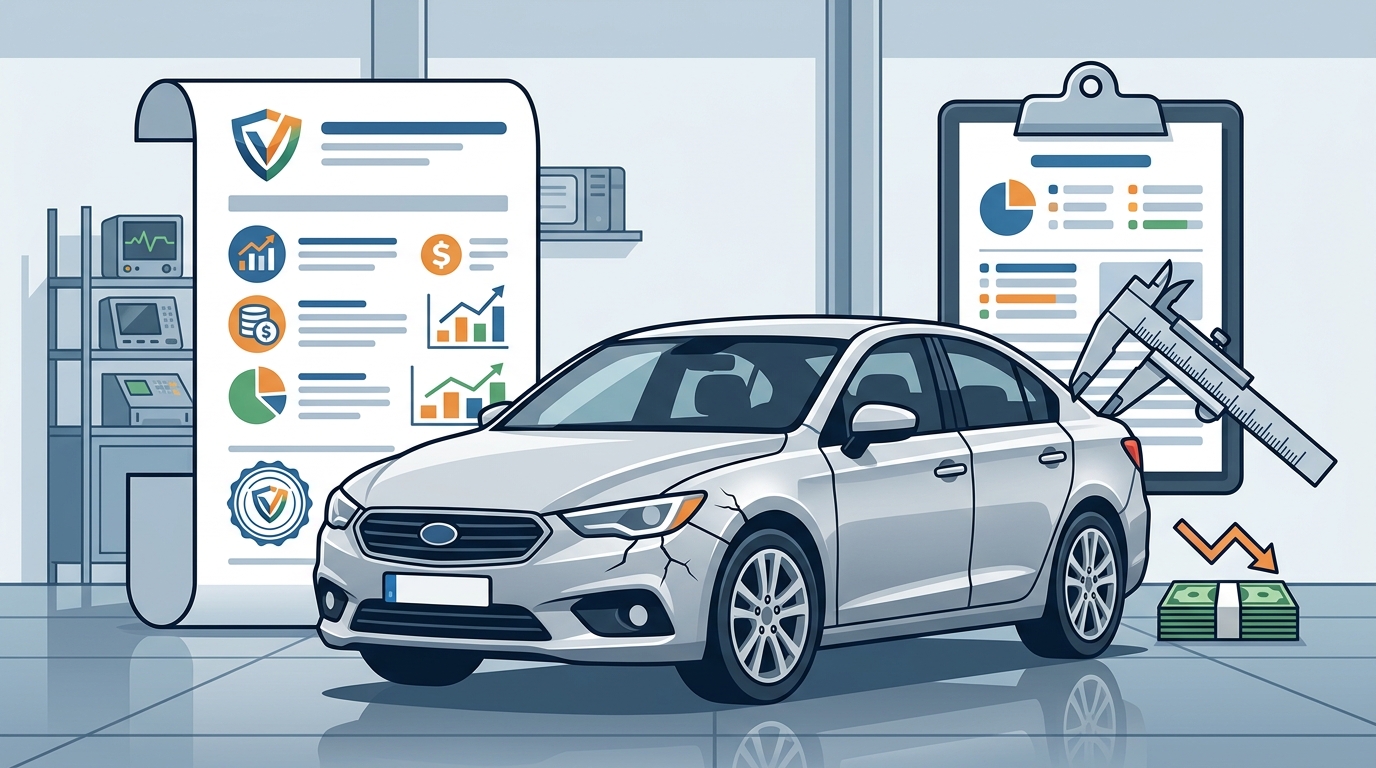
Different situations require different levels of detail. Vehicle Value Analysis offers tiered reporting options to meet these needs. Each tier provides increasing depth of analysis and support.
| Report Tier | Best For | Key Features |
|---|---|---|
| Silver Report | Simple claims and quick estimates | Pre-loss ACV, basic comparables, and a demand letter. |
| Gold Report | Standard diminished value claims | In-depth analysis, robust comparable grid, and detailed methodology. |
| Platinum Report | Complex disputes and legal support | Full reparability analysis, expert testimony support, and comprehensive documentation. |
The Silver Report is ideal for owners who need a quick assessment. It provides the essential data to start a conversation with the insurer. The Gold Report is the most popular choice for standard claims. It offers a thorough analysis that is difficult for adjusters to dispute. The Platinum Report is designed for high-stakes cases. It includes full reparability analysis and support for disputed valuations.
Each report is delivered digitally. You receive a certified valuation document and a market-verified comparable grid. The demand letter is pre-addressed to the at-fault carrier. This streamlines the process and ensures that your claim is taken seriously. The reports are backed by over a decade of Texas market data and national trends.
Key Takeaways
- Inherent Diminished Value is the permanent reduction in market worth that remains after a vehicle has been fully repaired following an accident.
- Verified Comparable Sales are actual transaction records of similar vehicles used to calculate the financial loss of your specific car.
- Insurance companies often deny diminished value claims to save money. They rely on the owner's lack of knowledge.
- Proving your loss requires data from verified comparable sales, not just repair estimates.
- Vehicle Value Analysis provides specialized reports recognized by major insurance carriers.
- Reports can be delivered within forty eight hours, allowing for quick claim resolution.
- You can reopen underpaid claims up to two years old with the right documentation.
Frequently Asked Questions
How do I prove my car lost value after repairs?
You prove lost value by obtaining a professional diminished value report. This report uses verified comparable sales to show the price difference between your repaired car and similar clean-title vehicles. The report provides a defensible dollar amount that you can present to the insurance company.
Does insurance cover diminished value?
Insurance coverage for diminished value depends on your state laws and the specific policy terms. In many cases, the at-fault party's insurance is liable for the inherent diminished value of your vehicle. You must actively pursue this claim, as insurers rarely offer it automatically.
What is the difference between inherent and repair-related diminished value?
Inherent diminished value applies to cars that have been perfectly repaired but still suffer from an accident stigma. Repair-related diminished value applies when repairs were done poorly, leaving the car worth less than it should be. Inherent diminished value is the more common and complex claim to prove.
How much does a diminished value report cost?
Reports typically range from $199.95 for a basic Silver Report to higher tiers for Platinum analysis. The cost is often a small fraction of the potential recovery. Many providers offer money-back guarantees if the report does not help you recover your value.
Can I use a diminished value report for a legal case?
Yes. Professional reports are designed to be used in negotiations and legal proceedings. They include certified valuation documents and market-verified data that hold up under scrutiny. Vehicle Value Analysis offers specific support for law firms handling property damage cases.
How long does it take to get a report?
Reports are delivered quickly, often within forty eight hours. The Silver Report can be generated in minutes. The more complex Platinum Report may take slightly longer to ensure accuracy. Fast delivery is crucial for meeting insurance claim deadlines.
Is diminished value coverage available in all states?
Diminished value claims are pursued in all fifty states. However, the legal standards vary. Some states have specific statutes, while others rely on case law. A specialized service will tailor the report to meet the requirements of your specific jurisdiction.
Start Your Valuation
Do not let your insurance company ignore your financial loss. Proving that your car lost value requires expert documentation and verified data. Vehicle Value Analysis provides the tools you need to recover what you are owed. Their reports are recognized by major carriers and backed by over a decade of market data.
Take control of your claim today. Visit Vehicle Value Analysis to get your free Silver Report. You can also explore their Diminished Value services for a comprehensive assessment. For law firms, explore their Bulk Solutions to streamline client support. Start the process now and recover the value your vehicle deserves.