What Documentation Do I Need to Prove My Car's Value to a Potential Buyer?
Selling a car privately almost always nets you more money than a trade-in—but only if you can convince a buyer your asking price is fair. The single most powerful persuasion tool isn't a fresh coat of wax or a clever listing title. It's a well-organized folder of documentation that tells an undeniable story about your vehicle's history, condition, and market worth.
This guide walks you through every document you should prepare before meeting a buyer, explains why each one matters, and shows you how to assemble a value-proof package that commands top dollar.
Why Documentation Is Your Best Negotiating Tool
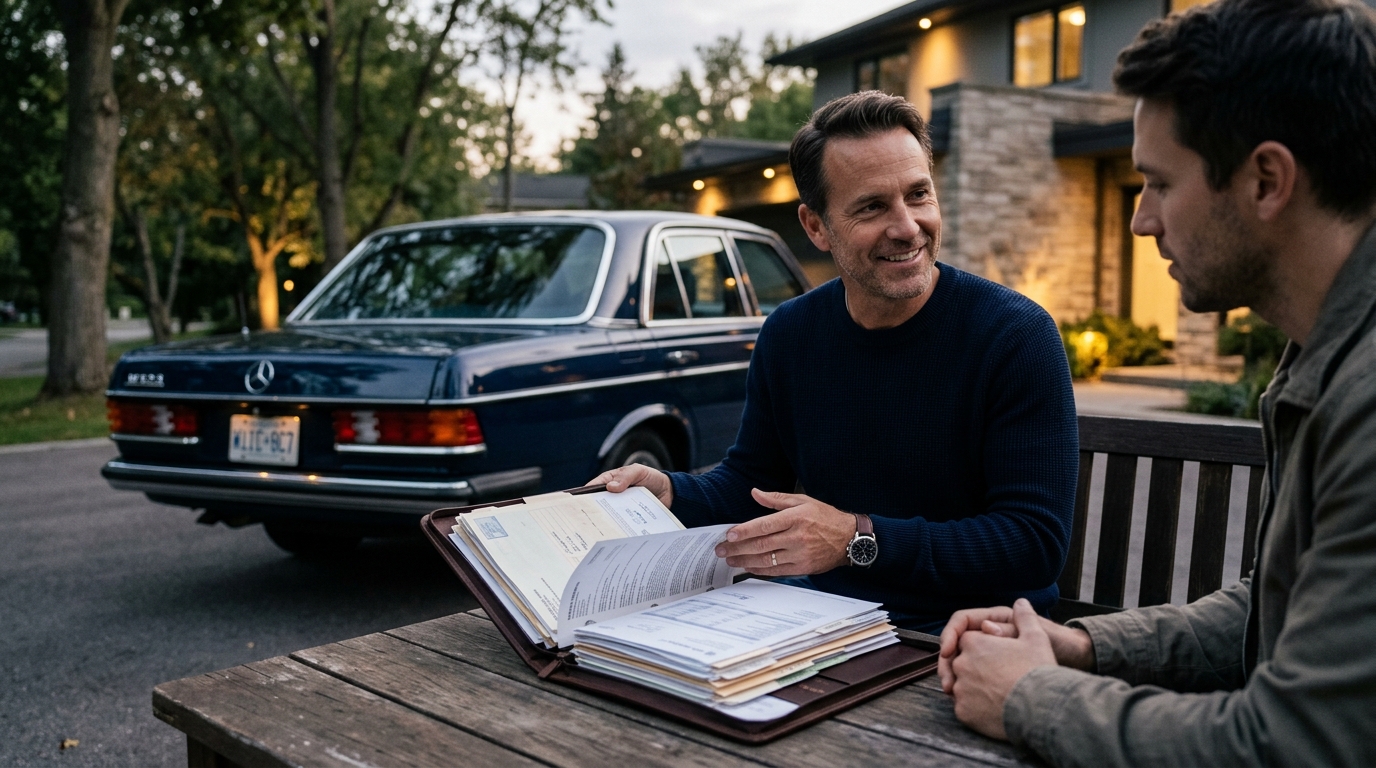
Buyers are naturally skeptical. They assume every seller inflates the condition and understates problems. Documentation flips that dynamic. When you hand someone a folder containing service records, a vehicle history report, and independent valuation printouts, you're shifting the conversation from opinion to evidence.
Having all your vehicle's documentation in order builds trust and transparency with potential buyers. Maintenance receipts prove you've kept up with oil changes, tire rotations, and other necessary services. And if a buyer tries to lowball you, organized paperwork gives you concrete evidence to push back.
1. Ownership and Legal Documents
Vehicle Title (Certificate of Ownership)
The title is the most critical document in any car sale. It is the legal proof that you own the vehicle and have the right to sell it. If you own the car outright, you already have the title in your possession. If you still owe money on the vehicle, the lien holder possesses the title, and you'll need to work with your lender to arrange the transfer.
If you've misplaced your title, contact your state's motor vehicle department to apply for a duplicate well before listing the car. This process can take days or weeks depending on the state, so don't wait.
Current Registration
A valid registration shows the buyer the vehicle is legally road-worthy and that you are the registered owner. Bring the original to showings but keep it in your possession until funds are secured.
Bill of Sale
While not required in every state, a bill of sale is strongly recommended because it documents the terms of the transaction—price, date, and the identities of both parties. It protects both the seller and the buyer from future disputes. Some states treat it as a mandatory filing document.
Government-Issued ID
Buyers—and in some states, DMV offices—will want to verify your identity matches the name on the title. Have a valid driver's license or state ID ready.
2. Service and Maintenance Records
Service records are arguably the most persuasive value-proving documents you can present. They demonstrate that the vehicle received consistent, professional care. Show maintenance history to boost your price and buyer confidence—regular oil changes signal good upkeep to any potential buyer.
What to Include
- Oil change receipts — The most basic proof of care. Consistent intervals show discipline.
- Major service milestones — Timing belt replacement, transmission fluid changes, brake jobs, coolant flushes.
- Tire purchase and rotation receipts — Shows you didn't neglect wear items.
- Warranty repair records — Demonstrates issues were fixed under factory warranty, not ignored.
- Recall completion documentation — Proof that all open recalls have been addressed.
No Receipts? Here's What to Do
If you don't have physical receipts, ask your dealer or mechanic for a service history summary. Many dealerships and franchise repair shops (Firestone, Jiffy Lube, Valvoline) can print a record tied to your VIN or phone number. Even a partial history is better than no history at all.
Cars with excellent service documentation are rare—only about 2% of cars that Kelley Blue Book provides estimates for qualify as being in excellent condition, which requires service paperwork proving routine maintenance.
3. Market Valuation Reports
Telling a buyer "I think it's worth $18,000" means nothing. Showing them three independent valuation reports that converge around $18,000 is an entirely different conversation. Here's where to get credible, printable valuations:
Kelley Blue Book (KBB)
KBB has been the trusted resource for used car values for over 90 years. Their values reflect local conditions in over 100 different geographic regions and are updated weekly, making them highly relevant to your specific market. Print both the private-party value and the trade-in value so buyers can see the spread.
Edmunds True Market Value
Edmunds TMV is a pricing system that helps determine the average transaction price based on what others are paying in your area. It presents trade-in, private party, dealer retail, and certified used values—giving the buyer a full picture.
CARFAX History-Based Value
CARFAX takes a different approach by tying the valuation directly to your car's VIN. Their History-Based Value considers data like accidents, service history, number of owners, and recall status to produce a vehicle-specific estimate rather than a generic model average.
Pro Tip: Cross-Reference Multiple Sources
Don't rely on just one source—get multiple estimates to find the sweet spot. Print reports from at least two different tools. When buyers see consistent numbers across independent sources, it's extremely difficult for them to argue for a significantly lower price.
4. Vehicle History Reports
A vehicle history report (CARFAX or AutoCheck) tells the buyer everything you can't show them by popping the hood. It covers accident history, title status (clean, salvage, rebuilt), ownership count, odometer readings over time, and whether the car was used as a fleet, rental, or personal vehicle.
Getting a CARFAX report before listing details your car's accident history and number of previous owners. Knowing your vehicle's full story allows you to speak confidently about its condition and value. Proactively sharing this report signals transparency—buyers who have to dig for this information themselves often assume the worst.
What Buyers Look For
- Zero accidents — Clean history commands a premium.
- Single owner — Fewer owners generally means better care.
- Consistent mileage accumulation — No odometer gaps or suspicious rollbacks.
- No title brands — Salvage, flood, or lemon-law buyback brands crush resale value.
Note that accident history has a measurable impact on value. Even a minor reported accident can reduce a vehicle's market price, while structural damage can decrease it significantly more.
5. Condition Evidence: Photos, Inspections, and Detail Receipts
Pre-Sale Mechanical Inspection
Paying $100–$200 for an independent pre-sale inspection by a trusted mechanic gives you a professional assessment document. This report reassures the buyer that no hidden problems lurk beneath the surface. It's especially persuasive for higher-priced vehicles where the stakes justify the cost. Have a mechanic check your car before listing it—this helps you price it accurately and shows buyers you're serious.
Professional Detail Receipt
A professional detail is one of the most effective ways to increase perceived value. Presenting the receipt alongside the car tells the buyer the cleanliness isn't a superficial cover-up—it was done professionally and recently. This relatively small expense can add hundreds of dollars to your selling price.
Timestamped Photographs
Take high-resolution photos of the exterior (all four corners, roof, wheels), interior (seats, dash, carpet, headliner), engine bay, trunk, and tires including tread depth. Date-stamp them. These serve as the car's condition record at the time of listing and protect you from disputes after the sale.
Emissions or Safety Inspection Certificate
Many states require the seller to provide the buyer with a current smog check or state inspection certificate showing the vehicle passed emissions before transferring ownership. Even in states where it's not required, a passing inspection certificate is one more piece of evidence supporting your value claim.
6. Original Purchase Documentation
Use your original sales paperwork or window sticker to confirm trim level and features that may increase resale value. This helps you get beyond the basics of year, make, model, and current mileage. For example, a 2021 Honda Accord may actually be an Accord EX-L that includes high-demand features like leather seats or a head-up display—details that directly impact what the car is worth.
If you no longer have your original window sticker, services like iSeeCars can recreate one using your VIN, letting consumers confirm a car's original price and equipment, along with warranty information, fuel efficiency estimates, and safety ratings.
Why This Matters for Value
Trim-level confusion is one of the most common reasons sellers undervalue their own car. A fully loaded variant of the same model can be worth thousands more than the base version. Original documentation eliminates ambiguity and lets you justify the price premium for optional equipment.
7. State-Specific Paperwork You Might Need
Car sale requirements vary significantly by state. Beyond the universal documents above, your state may require:
- Odometer Disclosure Statement — Federal law requires an odometer disclosure for most vehicles under 10 years old. Many states have their own forms (e.g., North Carolina's MVR-180).
- Damage Disclosure Statement — Some states, like North Carolina, require sellers to complete a specific damage disclosure form (MVR-181).
- Release of Liability / Notice of Transfer — At least 22 states require you to file a release of liability or notice of transfer with the DMV after the sale to avoid future liability for tickets, tolls, or even crimes committed with the vehicle.
- Notarization — Some states require the seller's signature on the title to be notarized before the transfer is legal.
Check with your local DMV or motor vehicle department for the exact requirements in your state. Make a checklist based on your state's requirements, then gather everything before you list the car.
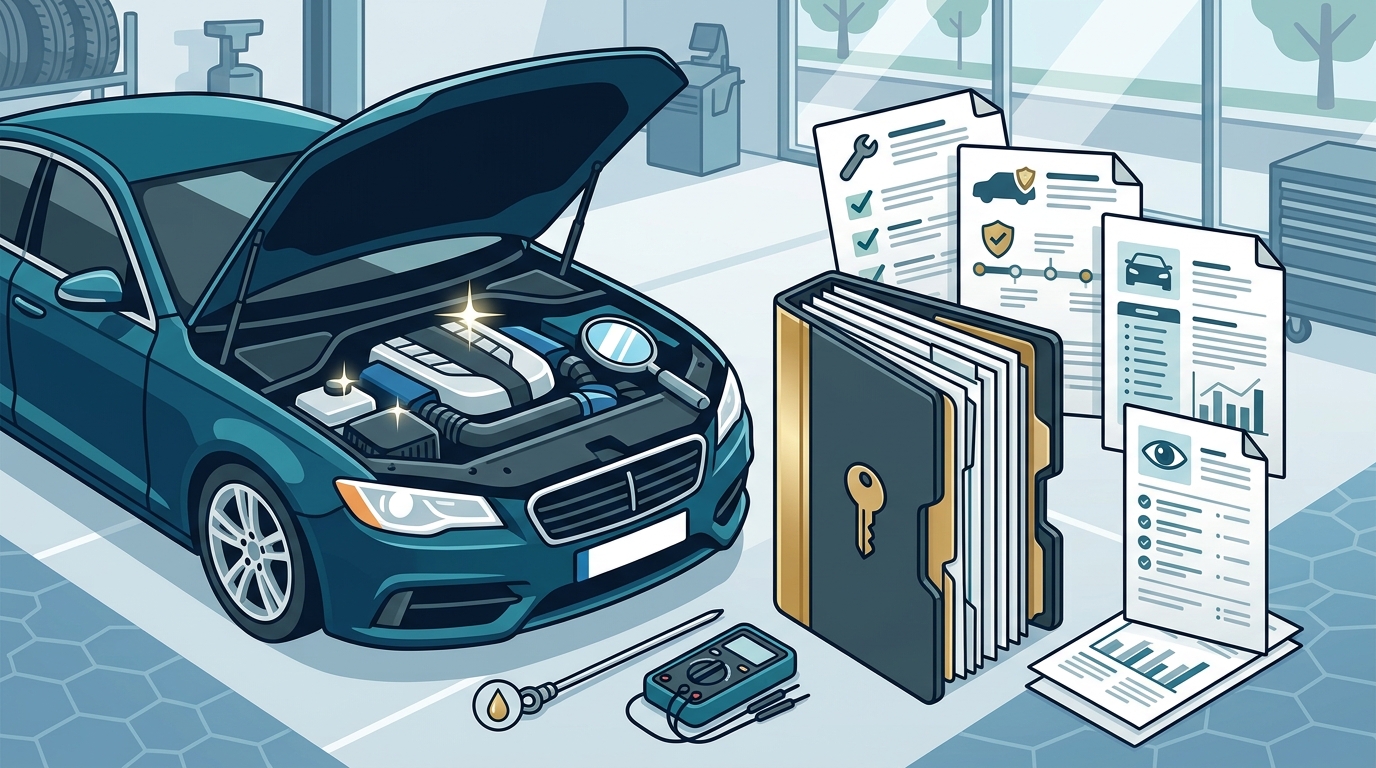
How to Assemble Your Value-Proof Folder
Organization matters almost as much as content. A jumbled pile of crumpled receipts doesn't inspire confidence. Here's how to present your documentation professionally:
- Use a clean folder or binder — Gather your service records, the owner's manual, the title, and registration into a single folder. Separate sections with tabs.
- Lead with valuation reports — Put KBB, Edmunds, and CARFAX value printouts right at the front. This sets the price anchor before the buyer sees anything else.
- Follow with the vehicle history report — Proves the car's clean background.
- Include service records chronologically — Newest on top so the buyer sees recent care first.
- Add inspection and detail receipts — Shows recent professional attention.
- End with original purchase docs — Window sticker, original bill of sale, warranty booklet.
- Make copies — Bring originals but also have copies ready. Never hand over originals until money changes hands.
- Create a digital backup — Scan or photograph all documents. If a buyer wants to review remotely before visiting in person, you can send a PDF package instantly.
Key Takeaways
- A well-organized documentation folder is the most effective tool for justifying your asking price and preventing lowball offers.
- The vehicle title is legally required; the bill of sale and release of liability protect you from post-sale liability.
- Service records directly influence how buyers perceive condition—and condition has an enormous impact on pricing.
- Print valuation reports from at least two independent sources (KBB, Edmunds, CARFAX) to establish a credible price range.
- A vehicle history report shared proactively signals transparency and builds trust.
- Original purchase paperwork and window stickers confirm trim and features that can add thousands to your car's value.
- State requirements vary—check your local DMV for odometer disclosures, damage disclosures, notarization rules, and release-of-liability filings.
- Present everything in a clean folder with copies available. Never release originals until payment is secured.
Frequently Asked Questions
What is the single most important document when selling a car?
The vehicle title. It is the legal proof of ownership and is required to transfer the car to a new owner. Without a clear title, you cannot legally complete a sale. If yours is missing, apply for a duplicate through your state's motor vehicle department before listing.
How do I prove my car's value if a buyer disagrees with my price?
Present printed valuation reports from multiple independent sources like Kelley Blue Book, Edmunds, and CARFAX. When two or three reputable tools converge on a similar number, it's very difficult for a buyer to argue the price is unfair. Supplement these with your service records and a pre-sale inspection report.
Do I need a vehicle history report to sell my car?
It's not legally required in most states, but it's highly recommended. A CARFAX or AutoCheck report shows accident history, title status, and ownership count. Sharing it proactively builds trust and can prevent buyers from using unknown history as leverage to negotiate your price down.
What if I don't have any service records for my car?
Contact the dealership or repair chain where you had work done. Many shops can print a history tied to your VIN or phone number. Even partial records help. If nothing is available, consider getting a pre-sale inspection to at least document the car's current mechanical condition.
What state-specific paperwork might I need?
Requirements vary, but common state-specific documents include odometer disclosure statements, damage disclosure forms, notarized title signatures, smog or emissions certificates, and release-of-liability or notice-of-transfer filings. Check your local DMV website for your state's complete checklist.
Can a window sticker really affect my car's value?
Yes. The original window sticker or recreated version confirms your car's exact trim level, factory options, and original MSRP. This documentation can add hundreds or even thousands of dollars to your asking price by proving your car has premium features that a generic model lookup might miss.
Should I get a pre-sale inspection before listing my car?
For vehicles valued above a few thousand dollars, a $100–$200 independent inspection is a worthwhile investment. It gives you a professional condition report, helps you price accurately, and signals to buyers that you have nothing to hide. It can also help you decide which minor repairs are worth doing before listing.