

How Often Should You Reassess Your Car's Value Before Selling?
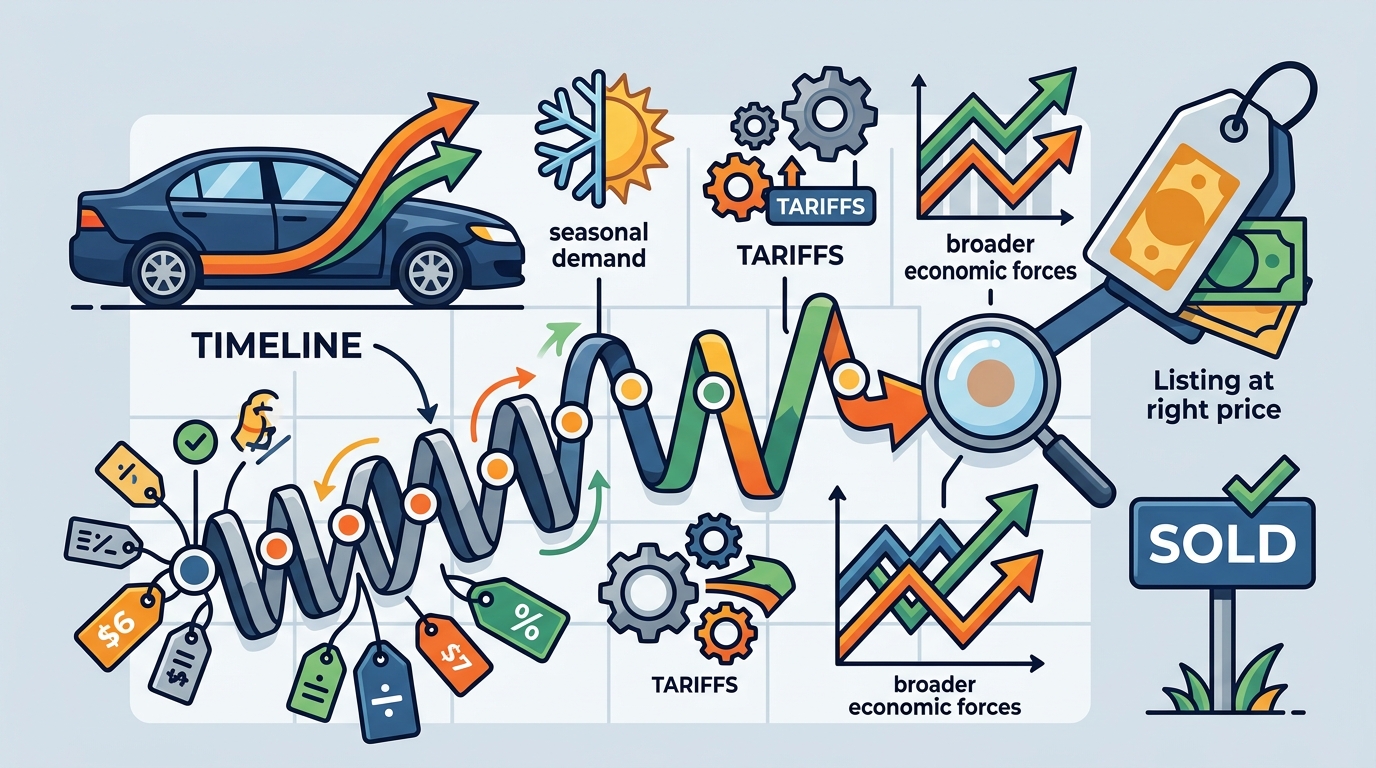
If you plan to sell your car within the next few months, staying on top of its current market value is one of the smartest moves you can make. Used-car prices shift constantly due to seasonal demand, tariff policy changes, and broader economic forces. Here is a practical, week-by-week framework for reassessing your vehicle's worth so you list at the right price and close the deal faster.
Why Your Car's Value Can Change Month to Month
Car depreciation is not a smooth, predictable line. While the long-term trend is always downward, short-term market conditions can accelerate or temporarily reverse that decline. Several forces drive these fluctuations:
- Seasonal demand: Trade-in and resale values tend to be stronger in the first half of the year. Dealerships need more inventory to meet spring and summer buyer demand.
- Tariffs and policy shifts: In 2025 and 2026, tariff uncertainty has made pricing less predictable. As Kelley Blue Book notes, automaker responses to tariffs shift constantly, meaning local prices can change week to week.
- Depreciation curve: On average, a car loses roughly 15% of its value per year after the initial first-year drop. That works out to more than 1% per month—enough to matter if your sale window spans 90 days.
- Supply and inventory: When inventory is low, demand increases and pushes up sales prices. When supply is large, prices fall.
Step 1: Establish a Baseline Valuation (12–8 Weeks Before Your Target Sale Date)
Your first reassessment should happen roughly three months before you intend to sell. At this stage you are not setting a listing price—you are gathering data.
What to do
- Check two to three valuation sources. Use Kelley Blue Book, Edmunds, and Carfax History-Based Value. Each tool uses different methods, so checking multiple sources and averaging them gives the most realistic price range.
- Look at both retail and trade-in values. Knowing both figures helps you set a price that is competitive yet realistic and shows buyers you have done your homework.
- Note your current mileage and condition honestly. KBB reports that only about 3% of cars qualify as “Excellent.” If you are unsure between two condition categories, choose the lower one for a more realistic estimate.
Record these numbers in a simple spreadsheet or note. This baseline becomes the anchor for every future check.
Step 2: Monthly Market Check (8–4 Weeks Out)
Once you have a baseline, revisit your car's value once per month. At this frequency you will catch meaningful shifts without overreacting to noise.
What to watch for
- Price movement on comparable listings: Browse local listings on platforms like Autotrader, Facebook Marketplace, and Craigslist. Pay attention to mileage, features, and condition to get a realistic picture of your competition.
- Valuation tool changes: Re-run your KBB and Edmunds appraisals. KBB updates its Fair Purchase Price weekly using recent local transactions, so even a monthly re-check will surface meaningful trends.
- Mileage accumulation: If you are still driving the car daily, every 1,000 additional miles can nudge the value downward. Driving an average of 7,500 miles per year versus 15,000 can reduce depreciation by thousands over time.
Step 3: Biweekly Fine-Tuning (4–2 Weeks Out)
As your sale window approaches, increase to one check every two weeks. This is where small pricing adjustments can make or break your final sale price.
Key actions
- Compare your baseline to the current number. If your car's estimated value has dropped more than 2–3% from your initial baseline, you may want to accelerate your listing date.
- Factor in seasonal timing. Values have historically been higher in the first two quarters of the year, with larger drops in the final two quarters. If you are approaching Q3 or Q4, pricing slightly below market can attract faster offers.
- Get a dealer appraisal. Visit a local dealership or use an instant online trade-in tool. This real-world offer serves as a floor price—you know you can get at least that amount, which strengthens your negotiating position in a private sale.
Step 4: Weekly Monitoring Once Your Car Is Listed
After you publish your listing, check your valuation tools and listing performance weekly.
- Track inquiry volume. If you are not getting serious inquiries after two to three weeks, reassess your pricing. Lots of views but no offers usually signals the price is too high.
- Adjust in small increments. Negotiation margins have narrowed to 3–5% of list price in 2025, so a drop of $300–$500 is often enough to spark renewed interest.
- Monitor new comparable listings. A flood of similar cars entering your local market can push your price down. Stay aware and adjust proactively.
Quick-Reference Reassessment Schedule
| Weeks Before Sale | Reassessment Frequency | Primary Action |
|---|---|---|
| 12–8 weeks | Once (baseline) | Gather valuations from 2–3 tools; document mileage and condition |
| 8–4 weeks | Monthly | Re-run appraisals; scan local comparable listings |
| 4–2 weeks | Every two weeks | Fine-tune price; get a dealer or instant cash offer |
| Listed / final 2 weeks | Weekly | Monitor inquiries; adjust price in small increments |
Events That Should Trigger an Immediate Reassessment
Outside of the regular schedule, certain events warrant an on-the-spot value check:
- New model announcement: When the manufacturer releases a refreshed or redesigned version of your car, used values for the outgoing model often dip.
- Major policy changes: Tariff adjustments, new EV tax credits, or emissions regulations can shift demand overnight. In 2025 and 2026, tariff policy has complicated decisions for automakers and dealers alike.
- Accident or damage: Even minor fender-benders reduce resale value. Cars involved in accidents typically see valuations drop by around 10% even after repairs.
- Mileage milestones: Crossing 60,000, 100,000, or warranty-expiration thresholds can cause a noticeable value step-down. Selling before 100,000 miles or before warranty expiration generally yields a better return.
Best Tools for Ongoing Value Tracking
You do not need expensive software. These free resources cover most sellers' needs:
- Kelley Blue Book (kbb.com): Offers both trade-in and private-party values. Updates Fair Purchase Price weekly based on local transaction data.
- Edmunds (edmunds.com): Provides detailed condition categories and instant trade-in offers through participating dealers.
- Carfax History-Based Value: Factors in the specific vehicle history report, which can differentiate your car from generic estimates.
- CareEdge Depreciation Calculator (caredge.com): Projects resale value over the next decade using model-specific depreciation curves.
For the most accurate picture, check two to three sources and average them to arrive at a realistic price range.
Key Takeaways
- Start three months early. Your first valuation check should happen 12 weeks before your target sale date to establish a reliable baseline.
- Increase frequency as your sale date approaches. Move from monthly to biweekly to weekly checks as you get closer to listing.
- Use multiple valuation tools. No single source is definitive. Averaging KBB, Edmunds, and Carfax values produces the most realistic estimate.
- React to market events. Tariff changes, new model releases, and mileage milestones all justify an immediate reassessment outside your regular schedule.
- Adjust quickly once listed. If inquiries stall after two to three weeks, lower your price by a small margin rather than waiting and losing more to depreciation.
Frequently Asked Questions
How much can my car's value change in just one month?
Most vehicles depreciate at roughly 1–1.5% per month under normal conditions. On a $25,000 car, that could mean a $250–$375 decrease. Market disruptions like tariff changes or seasonal demand swings can amplify or reduce this amount.
Is it worth paying for a professional appraisal before selling?
For most mainstream vehicles, free online tools from KBB, Edmunds, and Carfax provide sufficiently accurate estimates. A professional appraisal is more useful for classic cars, rare trims, or vehicles with extensive modifications where online tools lack data.
Do seasonal trends really affect used-car prices?
Yes. Historically, used-car values are higher in the first two quarters of the year because more buyers enter the market and dealerships need inventory to meet demand. Prices tend to soften in Q3 and Q4.
Should I check my car's value differently if I'm selling an EV?
EV resale prices vary widely depending on battery condition and warranty coverage. EVs can experience a steep drop of 35–40% in the first year. If you are selling an EV, include a recent battery health report and highlight remaining warranty coverage, as these factors significantly influence buyer confidence and offer amounts.
What if my car crosses 100,000 miles before I sell it?
Crossing major mileage thresholds often triggers a noticeable price step-down. The depreciation rate tends to slow after 100,000 miles, but the psychological barrier still matters to buyers. If you are close to this milestone, selling sooner rather than later can preserve value.